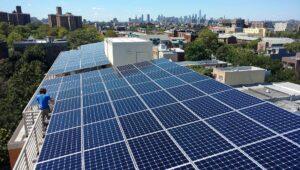
Remember when rooftop solar panels were seen as only for Star Trek fans or Y2K preppers? Now, 4 million U.S. homes proudly show off their solar panels. What’s behind this change? It’s a mix of IRS incentives, growing climate concerns, and that one neighbor who loves to talk about their electric bill.
The Department of Energy’s SETO testing shows that solar systems are now a status symbol, even beating out swimming pools. Energy savings have become the new way to show off. Your neighbors might be generating 8kW while watching Netflix.
So, why did solar panels become so popular? It’s thanks to Elon Musk’s solar roof tiles and Greta Thunberg’s environmental advocacy. Solar panels are now about saving money and looking good. The 26% federal tax credit is just a bonus for 2020.
We’ll explore how solar solutions went from being eco-friendly to appealing to capitalists. We’ll also see why your utility company is now smiling like a used car salesman. And yes, solar panels can make your home look cooler. But, sorry, your 1970s shag carpet might not be as stylish.
Financial Advantages
Did you know your roof could earn more than your stocks? Welcome to sunshine economics, where solar panels act like smart investors. Instead of “greed is good,” we say green is the new gold.
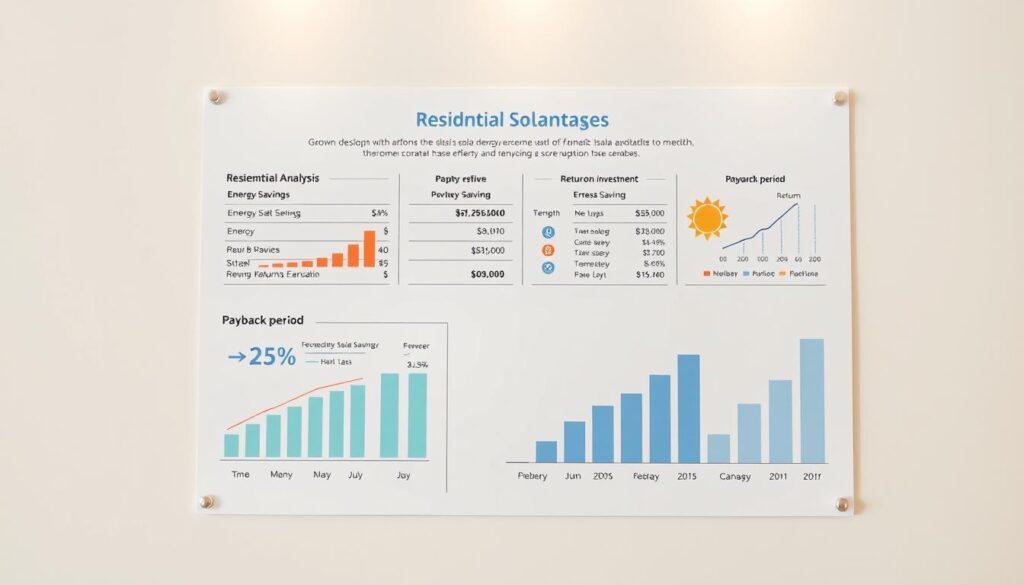
The New Math of Sunshine Economics
Imagine making Scrooge McDuck jealous with your tax credits. The government gives you a 30% rebate on solar panels. For a $22,500 system, you get $6,750 back.
But there’s more:
- Utility bills cut by 40-70% right away
- Payback periods now under 8 years (down from 15 in 2010)
- Systems last over 25 years – longer than most mortgages
This isn’t just saving on energy. It’s inflation-proof income generation. Your panels earn 3-6% annual returns through savings and incentives.
From Tax Breaks to Property Value Peaks
Berkeley Lab found homes with solar sell for 4.1% more. That’s $15,000 extra on a $375,000 house. Why? Buyers see panels as a must-have, like a renovated kitchen.
| Investment | Average ROI | Liquidity |
|---|---|---|
| Solar Panels | 20-30% | Instant utility savings |
| Stock Market | 7-10% | Market hours only |
| Savings Account | 0.5% | Fully liquid |
The best part? Solar doesn’t worry about Fed rate hikes or meme stocks. It’s the set-it-and-forget-it energy solution that works while you watch Netflix. If only your Roth IRA could impress at BBQs…
Environmental Impact
Forget sorting recycling bins – today’s climate heroes are trading hemp tote bags for solar innovation. Let’s look at how rooftop panels and industrial solar farms compare in the sustainability world. It’s like a debate between a Prius owner and a Hummer driver at a Whole Foods parking lot.
Carbon Footprints vs. Solar Panel Bootprints
Your average solar shingle is a powerhouse, like a CrossFit coach at a vegan bakery. Residential systems cut emissions by 18-59% compared to big solar farms. This is thanks to:
- Zero land-clearing concrete pours
- Direct energy-to-home pathways
- 1.5-tonne annual CO2 reductions per household (Source 2)
Rooftop Revolution: Small Panels, Big Numbers
While LEED-certified buildings show off recycled materials, your average suburban roof quietly saves a lot. Distributed renewable home energy systems create micro power grids. They’re impressive, without the energy guilt.
Solar Farm Frontiers: When Bigger Isn’t Better
Industrial solar fields work hard, but they face challenges:
| Factor | Rooftop Solar | Solar Farms |
|---|---|---|
| Land Use | Existing structures | 4-10 acres per MW |
| Transmission Loss | <1% | Up to 15% |
| CO2 Avoidance | 1.5 tonnes/year | 0.6-1.2 tonnes/year |
The math is clear: energy solutions anchored to homes deliver environmental benefits faster than Wall Street bets on AI stocks. Distributed generation might just get Mother Nature’s standing ovation – no biodegradable confetti needed.
Energy Independence
Remember when “off-grid” meant composting toilets and conspiracy boards? Now, solar technology has changed. Today, energy independence is sleek and modern, not like Ted Kaczynski’s cabin.
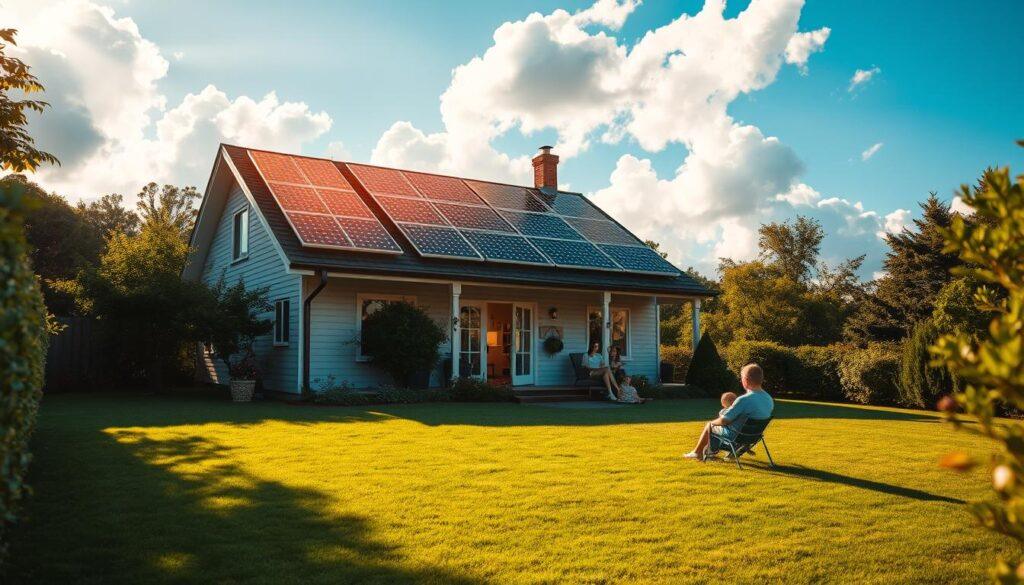
Grid Defection 2.0 – Batteries Included
The latest lithium-ion systems are far more advanced than before. Today’s energy solutions can power your Netflix through a zombie apocalypse. Solar-plus-storage systems are now 94% reliable during outages.
- Tesla Powerwall 3 holds 13.5 kWh – enough to microwave 672 bags of popcorn
- LG Chem batteries charge faster than your iPhone
- Whole-home backup costs dropped 40% in 2020
Utilities are worried. Why pay for poles and wires when your roof can be a renewable home energy plant?
Community Solar: The Sharing Economy’s Power Move
Not ready for rooftop panels? Community solar farms are like Spotify for solar technology. They let you:
- Subscribe to local solar arrays like Netflix shows
- Save 10-15% on bills without installing panels
- Share excess power like you’d split a UberPool
“Community solar could power 30 million homes by 2030 – that’s every household in Texas and Florida combined.”
This isn’t your hippie cousin’s commune. It’s energy solutions meets capitalism. Decentralized grids are creating energy democracy one megawatt at a time. The revolution might be solar-powered.
Conclusion
Four million American homes already use solar power. This is enough to power Miami and Pittsburgh together. But we need 20 times more to reach our net-zero goals.
Your roof can be the center of a modern energy revolution. Every solar panel installed today saves $1,500 from our climate debt each year.
Residential solar solutions are more than just reducing carbon emissions. They’re changing how we think about energy in America. That 6 kW system for your neighbor’s Tesla charger is a big step forward.
As recent analysis shows, we’re not just saving polar bears. We’re making our energy grid stronger, one rooftop at a time.
The beauty of renewable home energy is its paradox. The more we move away from big grids, the stronger our energy becomes. It’s like Ben Franklin inventing a solar-powered drone.
With costs expected to drop by 40%, soon your patio lights could be paid for by what you save on coffee. Solar power isn’t just for the coast anymore.
It’s not just for the rich or the coastal elite. A Texas rancher can run their AC on solar during power outages. It’s not about politics; it’s about using every sunbeam to fight energy waste.
The Apollo program put flags on the moon. Our roofs are planting solar arrays for real, survivable summers. Your meter is now counting savings, not waste.