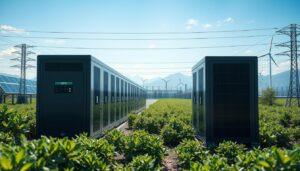
Do you remember when cell phones were huge and only made calls? That’s solar tech before it went to the gym. While we argued over flip phones and Razrs, photovoltaic panels were quietly getting better. Now, they’re a big deal.
NREL data shows today’s solar panels work 135% better than old ones. Costs have dropped by 99% from the 1970s. It’s like your coffee shop now offers free cold brew instead of $40 lattes.
Here’s the twist: we’ve been improving this tech without even trying. While we argued, scientists made new cells that are way more efficient. The Department of Energy just certified panels that are 47.1% efficient. That’s a big deal.
So, what happens when we actually try? We’ve made a huge leap in renewable energy. Batteries are getting cheaper, and governments are listening to the IPCC.
This isn’t just about saving polar bears anymore. It’s about whether we can out-innovate our bad habits. The numbers look good if we focus on energy innovation as the main character it is.
Historical Development
Let’s go back to when solar panels were rare. Bell Labs started with a 6% efficient “sun battery” in 1954. Now, they power everything from barbecues to DIY solar projects on TikTok. This change didn’t come from big labs but from homes and stores.
From Space Age Curiosity to Suburban Staple
NASA spent $28 per watt in the 1960s. Today, homeowners pay $0.20 per watt. This is an 80% drop in price, making solar panels affordable.
IKEA made installing panels easy, like building with LEGO. Here’s how solar panels evolved:
- 1954: Bell Labs’ prototype powers 1 light bulb
- 2000: 12% efficiency panels require engineering degrees to install
- 2020: 23% efficient “peel-and-stick” models sell at Costco
“When luxury cars and suburban shingles share tech specs, you know we’ve hit an energy inflection point.”
The Silicon Revolution
Solar panels have improved like Silicon Valley tech. They’ve become common and efficient. Here’s a timeline of solar panel improvements:
| Era | Breakthrough | Cost per Watt | Household Impact |
|---|---|---|---|
| Space Age (1960s) | Single-crystal silicon | $28 | 0.0001% homes |
| Tech Boom (2000s) | Polycrystalline cells | $3.50 | 0.4% homes |
| Modern Era (2020s) | PERC & Bifacial tech | $0.20 | 8% homes and climbing |
Today’s panels are 38x more powerful per dollar than old ones. It’s like the best Black Friday deal ever.
Recent Advances
When did solar panels become the ultimate multi-taskers? They’ve evolved from simple rooftop decorations to powering everything from your neighbor’s Tesla obsession to industrial parks in Phoenix. Solar energy is now invading spaces we’ve ignored for decades, making money while doing it.
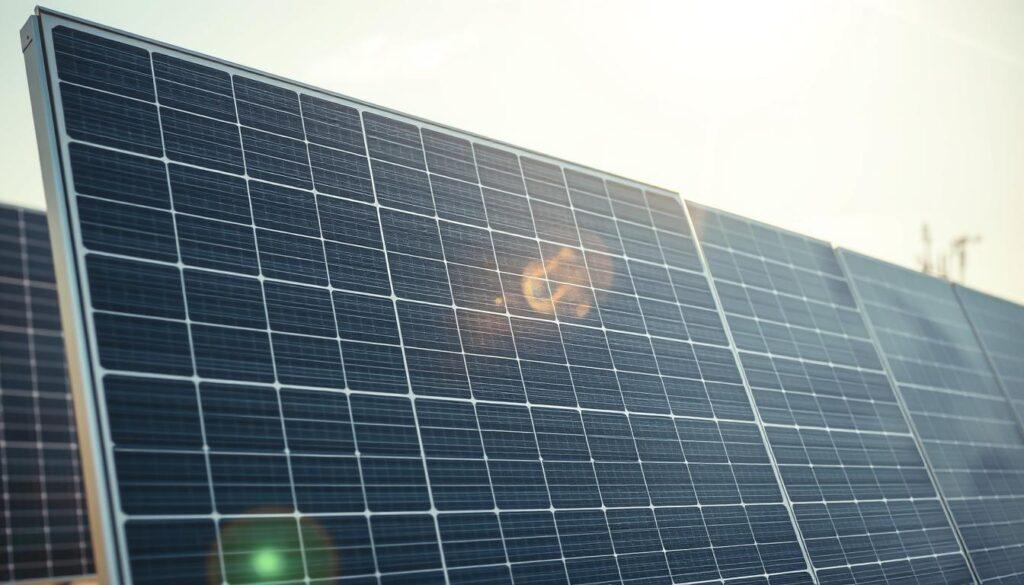
Beyond Rooftops – Solar’s Silent Invasion
Parking lots are the new frontier. Those asphalt deserts that soak up heat like a teenager’s black hoodie in July? Meet bifacial panels – solar’s answer to urban sprawl. These panels capture sunlight from both sides, turning idle pavement into revenue streams. Your Prius isn’t just avoiding sunburn anymore – it’s shading a photovoltaic money printer.
Double-Sided Power Plays
Recent data shows bifacial setups boost energy output by 15-20% compared to traditional panels. How? By capturing:
- Direct sunlight on top
- Reflected rays from concrete below
- Even ambient light bouncing off vehicles
It’s like getting paid for existing in three dimensions. Walmart’s testing these in 30+ locations – because why let customers’ SUVs waste good photons?
The Perovskite Revolution
Remember when smartphone processors doubled in speed every 18 months? Solar’s hitting its Moore’s Law moment with perovskite cells. Researchers just cracked 30% efficiency – a milestone silicon took 40 years to reach. These crystalline structures work like nature’s own semiconductors, absorbing light across wider spectra.
“Perovskite isn’t just improving solar – it’s redefining what’s physically possible.”
Commercial prototypes already exist, thinner than a credit card and flexible enough to wrap around curved surfaces. Tesla’s rumored to be eyeing integration with Cybertruck roofs – because of course they are.
Solar Paint & Subversive Sustainability
Here’s where it gets Banksy-level sneaky. Scientists are developing photovoltaic paint that turns any surface into a solar collector. Imagine:
- Skyscrapers generating power through their window coatings
- Highway sound barriers harvesting sunlight
- Your backyard shed funding margarita Fridays
Early tests show 8% efficiency – not groundbreaking, but enough to make your HOA president reconsider that beige exterior mandate. It’s not just energy innovation – it’s architectural rebellion with better ROI.
Future Outlook
Imagine a 2030 Manhattan skyline where glass towers moonlight as power plants. This isn’t sci-fi – it’s where energy innovation meets architectural necessity. As net-zero deadlines loom, solar technology is evolving faster than TikTok trends, creating strange bedfellows in the tech world.
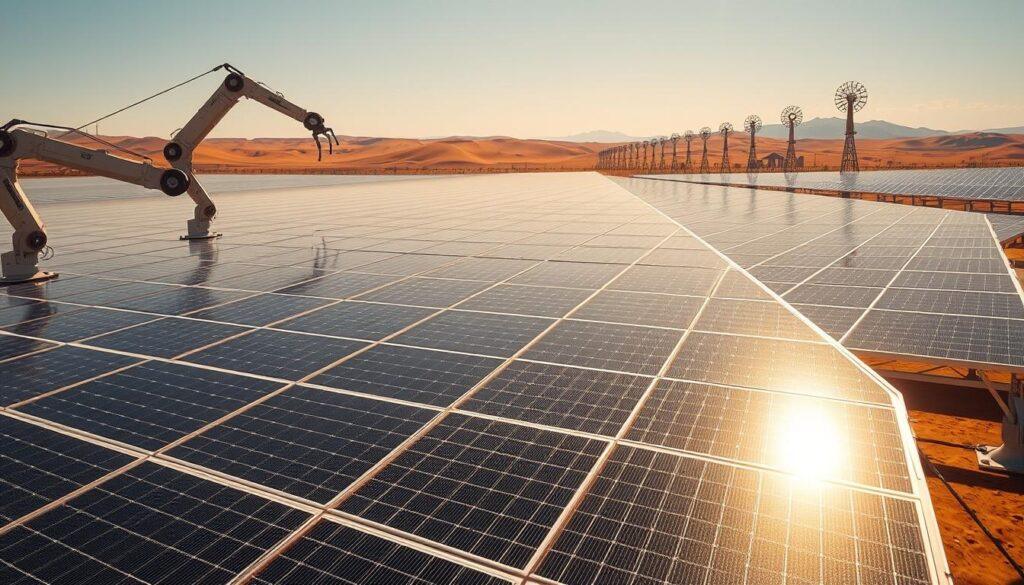
When Your Windows Become Watts
Elon Musk’s solar roof tiles now face competition from transparent photovoltaic glass. Microsoft recently unveiled AI-powered solar farms that make traditional panels look like flip phones. “When tech billionaires place competing bets,” quipped a Wall Street analyst last month, “smart money follows both.”
Consider these commercial game-changers:
| Technology | Efficiency | ROI Time | Scalability |
|---|---|---|---|
| Solar Roof Tiles | 18% | 12 years | Medium |
| Transparent Panels | 9% | 8 years | High |
| AI-Optimized Farms | 23% | 6 years | Extreme |
AI: The New Sunshine Forecaster
Google’s DeepMind now predicts solar output 36 hours in advance with 99.2% accuracy. This isn’t just about better weather apps – it’s reshaping energy economics. Utilities can now answer the age-old question: “What do we do when clouds crash the party?”
The future of solar energy predictions suggests 30% of global electricity could come from sunlight by 2050. That’s like replacing every coal plant east of the Mississippi with silicon and sunshine. But here’s the billion-dollar question: Will solar installation crews become the new oil rig workers?
“Solar’s biggest innovation isn’t on rooftops – it’s in boardrooms. CEOs now see sunlight as the ultimate non-union workforce.”
As cities transform into vertical power stations, the real revolution might be in energy storage. Recent breakthroughs in solid-state batteries could solve solar’s “night shift problem.” Suddenly, that 2050 projection seems conservative.
Conclusion
Crypto traders watch charts, while solar owners track the sun. Solar panels last 25-30 years, as shown by MIT’s Energy Initiative. This isn’t just about being green; it’s about saving money.
Your roof becomes a chessboard where sunlight beats out high bills. This change is happening everywhere, from Arizona to Rwanda. Solar power is making energy more democratic.
While tech companies focus on AI, villages are moving past coal. They use microgrids, skipping over old technology. Tesla Powerwalls store energy for late-night movies. In Kenya, farmers cool vaccines with energy that Dubai throws away.
Now, solar technology is getting even better. Transparent solar windows turn buildings into power plants. California’s new building codes require solar-ready roofs. Even Texas oilmen are installing solar panels at home.
Kierkegaard said we understand life backward. Solar power asks us to live forward, preparing for tomorrow’s challenges. Every watt we generate weakens oil’s hold. The real question is, when will you join the solar movement?