Imagine the national power grid as a huge, complex system. Now, picture it running on just sunshine and wind. It might seem like a recipe for disaster.
Grid storage is like the grid’s emergency fund. It’s a group of technologies that helps us save clean energy when we have it. Then, we use it when we need it most.
This isn’t just about big batteries. It’s also about pumping water uphill and compressing air in caves. The International Energy Agency (IEA) says this is key for handling the ups and downs of renewable energy.
We’re aiming to build a system that can handle the clean energy shift. But, we’re facing challenges. We need a lot of minerals to make it work. It’s like trying to put together a puzzle with too many pieces.
Technologies Used
Welcome to the world of energy storage, where solutions range from simple to complex. Grid energy storage is key to a renewable future. These technologies are shaped by physics, economics, and engineering.
Pumped hydro is like using gravity as a battery. It pumps water uphill when power is cheap and lets it flow down when it’s expensive. This method is reliable but needs two reservoirs and a big elevation change.
Electrochemical batteries, like utility-scale batteries, are the new stars. Lithium-ion batteries are popular because their cost has dropped a lot. They’re good for short-term needs like smoothing out solar power.
Flow batteries are like the complex albums of storage. They use liquid electrolytes in external tanks. This design allows them to decouple power and energy. They’re great for long-duration storage, making them ideal for shifting wind power.
Thermal storage captures sunlight in a jar, but with science. Liquid air energy storage (LAES) cools air until it liquefies, then expands to drive a turbine. Sand batteries heat silica sand with excess electricity and use it later for power.
Compressed air energy storage (CAES) is simple: stuff air into underground caverns under pressure, then release it to generate power. Gravity storage uses cranes to stack concrete blocks or trains to roll weights up a hill. Flywheels store energy as rotational momentum for seconds-long discharges.
Green hydrogen is a wildcard. It uses electrolyzers to split water into hydrogen and oxygen with renewable power. The hydrogen can be stored for months and used in fuel cells or industrial processes.
Choosing the right technology depends on the task. The grid needs solutions for seconds, minutes, hours, and seasons. Each technology must fit the job description.
| Technology | Best For | Typical Duration | Scalability |
|---|---|---|---|
| Pumped Hydro | Bulk energy shifting | Hours to days | Very High (site-dependent) |
| Lithium-ion Batteries | Frequency regulation, solar smoothing | Minutes to 4 hours | High (modular) |
| Flow Batteries | Long-duration renewable shifting | 4+ hours to days | Medium-High |
| Compressed Air (CAES) | Bulk storage, grid inertia | Hours | High (geology dependent) |
| Green Hydrogen | Seasonal storage, decarbonizing industry | Days to months | Potentially Very High |
The rise of utility-scale batteries has changed the game. But they’re just one part of a bigger plan. A resilient grid needs a mix of solutions for short-term and long-term needs.
The toolbox is full, but knowing which tool to use is key. With each year, we get more and better tools to build the energy system of tomorrow.
Impact on Grid Reliability
The real impact of battery storage on grid reliability is in milliseconds. It’s the difference between a smooth operation and chaos when weather changes. Grid storage is like a shock absorber for our renewable energy system.
Think of it as the grid’s Swiss Army knife. It can fix a frequency dip quickly. Traditional gas plants take longer, while batteries act fast.
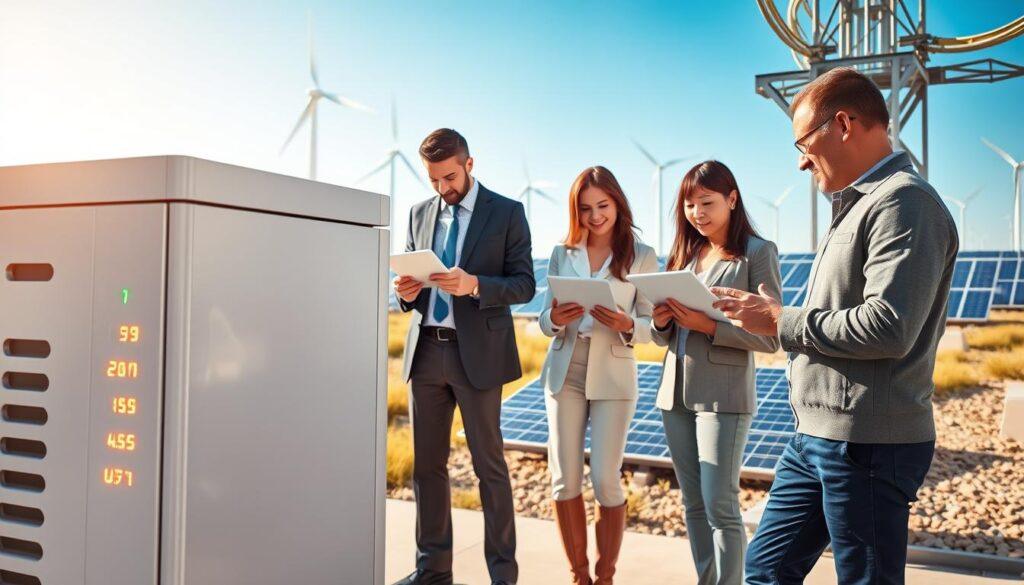
- Arbitrage: Buying cheap power at night and selling it back during peak hours. It’s a smart way to make money from electrons.
- Firm Capacity: It acts as a reliable backup when demand is high. A 4-hour battery discharge can avoid using expensive plants.
- Operating Reserves & Ancillary Services: It does the fine work—keeping the grid’s rhythm perfect.
- Transmission & Distribution Upgrade Deferrals: It helps avoid expensive infrastructure projects by reducing peak demand.
- Black Start Capability: It can start the grid again after a complete shutdown without external power.
In 2017, the U.S. market focused on short-duration services. Now, the magic is in value-stacking—using one asset for many services.
| Grid Service | Traditional Approach | Storage Solution | Response Time |
|---|---|---|---|
| Frequency Regulation | Gas Turbines | Battery Storage | Seconds vs Milliseconds |
| Peak Shaving | Peaker Plants | 4-Hour Discharge | Minutes vs Instant |
| Grid Support | Transmission Upgrades | Strategic Placement | Years vs Months |
Using storage for more services means it wears out faster. Operators must balance making money with keeping batteries working long.
This requires smart management systems. Companies like Dehn offer complete solutions. They know reliability is about perfect management.
We’ve moved from using storage for one thing to using it for many. This shift makes our grid more reliable and efficient. It’s a big change from just fixing problems to always improving.
In the end, grid storage does more than prevent blackouts. It makes our electrical system better. Every millisecond counts because timing is everything in grid reliability.
Policy and Incentives
If engineering is the muscle behind utility-scale batteries, then policy is the nervous system. It’s often twitchy, sometimes dysfunctional, but essential. The International Energy Agency’s latest report shows our clean energy goals are weak. We’re not on track for their Net Zero Scenario.
Why? Brilliant technology meets the wall of real-world economics and regulation. It’s like brilliant plans crashing into the reality of high costs and rules.
Let’s diagnose the patient. First symptom: soaring lithium prices. The minerals we need are caught in geopolitical crossfires and supply chain snarls. It’s like planning a road trip with gasoline prices doubling every month.
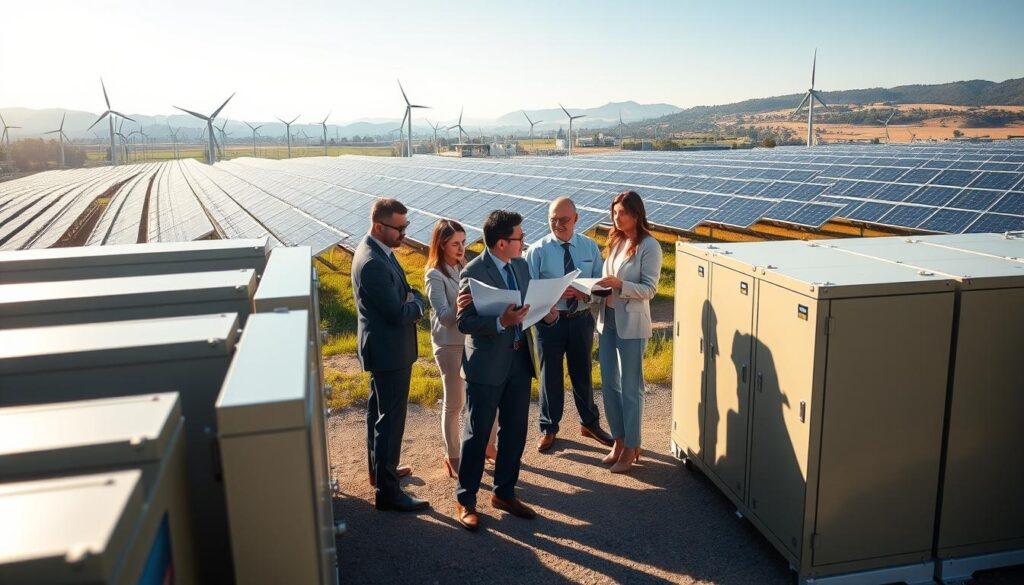
Enter the policy prescription pad. Some states are writing their own rules. California’s Public Utilities Commission made rules for utilities to buy battery storage services. Their goal is to ensure grid reliability and prevent double compensation.
The federal government has also stepped in with big changes. The Investment Tax Credit for standalone storage, boosted by the Inflation Reduction Act, changed the economics overnight. This made massive battery projects financially viable for even conservative investors.
But, we’re trying to run a 21st-century grid with 20th-century market designs. Our electricity markets were built for predictable coal plants, not nimble batteries. We need to decide how to pay for capacity, flexibility, or just kilowatt-hours.
The real policy shift needed is philosophical. We must treat utility-scale batteries as essential grid infrastructure. This change affects everything from permitting to financing to long-term grid planning. When communities invest in local rooftop power systems, they’re creating distributed nodes that could feed into larger storage solutions.
Without this change, we’re trying to win the clean energy Super Bowl with a rulebook from the flag football league. The stakes are high: grid reliability during extreme weather, affordable electricity for everyone, and hitting climate targets. The technology is ready. The batteries are being built. Now, we need the policy nervous system to catch up with the engineering muscle.
Recent Success Stories
Forget the whiteboard diagrams. The real proof is in places like Moss Landing, California. A retired gas plant now hosts a 300-megawatt giant built from 4,500 battery racks. It’s a symbol of the energy shift, humming where fossil fuels once did.
In South Australia, the Hornsdale Power Reserve, or the “Tesla big battery,” is a star. It quickly paid back its cost by stabilizing the grid, saving consumers millions. These projects are the heroes, but the whole grid storage team is getting ready. Companies are using advanced tech to make these projects not just feasible, but profitable.
The story has changed. We’re no longer wondering if large-scale grid storage works. Now, we’re asking how fast we can build it. Real-world engineers are turning ideas into real assets, making the grid stronger.
This is the moment grid-scale storage took center stage. Success stories are now the standard, not exceptions. Every megawatt added brings us closer to a cleaner, more reliable grid. The spotlight is on, and the show has started.