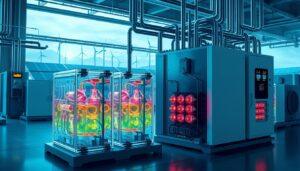
Trying to mix renewable energy into our system is tough. It’s like teaching your grandfather to use TikTok. The challenge is real, but so is the need.
We’re stuck in the “renewables paradox.” Everyone wants clean energy, but changing infrastructure is hard. Our grid is like a 1950s highway system trying to handle Tesla autopilot traffic.
Good grid integration means more than just adding solar panels and wind turbines. It’s about changing how electricity flows from source to socket. We need to keep the system stable and reliable.
We can’t just wish for renewable energy to work with our old infrastructure. The hardware wasn’t made for this.
Technical Hurdles
Wind energy doesn’t just enter our grids easily. It’s more like a loud rock concert. The Department of Energy found that wind’s ups and downs are hard to predict, like a weather forecast during a hurricane.
There are four big challenges to making grid stability work:
- Transmission adequacy: Getting power from windy plains to cities
- Grid reliability: Keeping the lights on when wind is missing
- Wind hybrid systems: Renewable energy needs partners
- Cybersecurity: Protecting from digital attacks
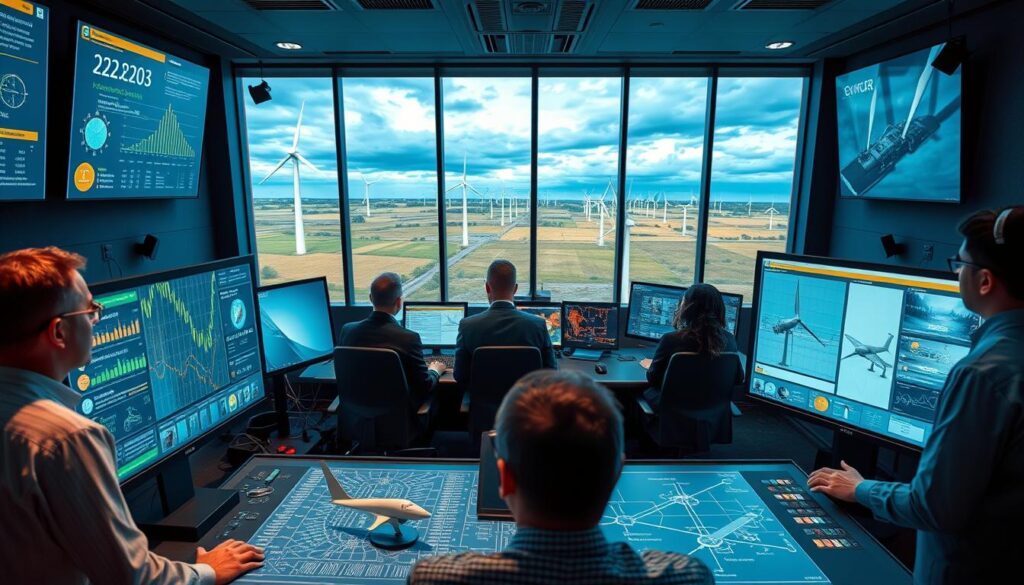
Grid-forming inverters are a big step forward. They let wind and solar power start the grid on their own. It’s like giving them CPR.
Advanced forecasting and scheduling help predict wind better than local weathermen. Short circuit analysis keeps our systems safe from power surges.
For wind energy grid integration to work, we need to solve these technical problems. It’s not just about clean energy. It’s about making it work with our current grid.
Switching to renewable energy isn’t easy. It needs smart engineering to handle wind’s changes and keep our power flowing smoothly.
Storage and Load Balancing Solutions
When renewables are hard to get, we need serious storage solutions. It’s like looking for a reliable partner for the grid. The sun sets, and wind takes breaks.
The flexibility supply curve offers a “renewables buffet.” It’s not a magic solution but a menu of options. It’s for those who love energy and want the best.
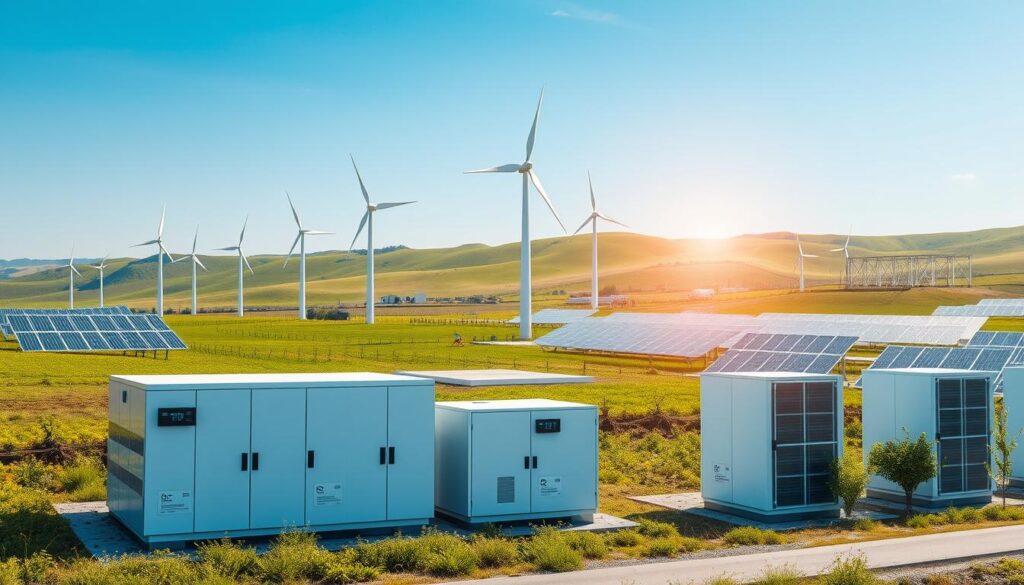
- Pumped hydro storage – Uses gravity as a battery. Water goes up when energy is cheap, and down when it’s expensive.
- Thermal storage – Saves energy by keeping it warm for later.
- Electrochemical batteries – The new stars of energy storage.
- Wind hybrid systems – Combine generation, load, and storage.
Hydrogen electrolyzers are game-changers. They produce clean fuel when electricity is cheap. It’s like meal prepping for the grid.
Recent research on grid flexibility shows how these systems work. They use demand-response incentives for “opportunistic energy storage.” This means they store energy when it’s plentiful and use it when it’s not.
This approach is elegant. We work with nature’s whims instead of fighting them. It involves balancing areas, economic dispatch, and forecasting.
Demand response programs make consumers active. Imagine getting paid to run your dishwasher at 2 AM. It’s a win-win for everyone.
The future of renewables isn’t about forcing consistency. It’s about building smart systems for nature’s unpredictability. It’s better than trying to control the weather.
Case Studies
Let’s dive into where rubber meets road – or turbine blades meet transmission lines. Real-world projects are already solving our grid integration puzzles. These aren’t just ideas; they’re real-life examples happening now.
The Atlantic Offshore Wind Transmission Study is like a dating app for East Coast states. It’s about finding coordinated transmission solutions to power millions by 2050. It’s not just planning; it’s a love story for energy enthusiasts.
I2X, the Interconnection Innovation e-Xchange, is making clean energy connect to the grid easier. It’s like TSA PreCheck for renewable projects, making things faster and less complicated.
The UNIFI Consortium might sound like a sci-fi group, but they’re changing the game with grid-forming inverters. They’re making it easier to manage renewable energy sources. No more juggling multiple systems to keep the lights on.
Current projects tackling grid integration challenges include:
- Cybersecurity protocols for wind systems (because hackers love infrastructure)
- Gulf of Mexico transmission planning (oil country meets offshore wind)
- Standardized interconnection processes (making paperwork slightly less painful)
These case studies show we’re beyond just talking about it. Real engineers are solving real problems right now. The transition is happening in labs, boardrooms, and ocean floors.
Want to see how this works in practice? Check out this detailed analysis of wind energy’s grid integration success. It’s like watching underdogs become MVPs in real time.
The beauty of these case studies? They show grid integration isn’t just a future idea. It’s happening today through teamwork, innovation, and determination to make renewable energy work at scale.
Looking Forward – Smart Grids
Our energy future seems like waiting for the iPhone 20 while we’re stuck with the iPhone 12. We need to nearly double global grid investment by 2030. This means adding enough transmission lines to wrap around Earth many times over.
We’re tracking everything from connection times to curtailment levels. It’s like grading our grid performance with academic rigor. True grid stability requires more than technical upgrades—it demands economic justice models too.
Emerging markets need climate finance support alongside engineering solutions. The renewable transition isn’t just about smarter hardware. It’s about rebuilding our energy infrastructure with equity in mind. The future of smart grids depends on this balanced approach.
We’re not just upgrading wires and sensors. We’re reimagining how energy flows through society. Grid stability becomes the foundation for everything else. The challenge? Making this transformation accessible to all economies, not just the wealthy ones.
Our energy report card will show whether we passed this critical test. The smart grid revolution waits for nobody—but it must include everyone.