Let’s get to the point. We’re not talking about the batteries in your remote. We’re discussing the key to our energy future—the bridge between unstable renewable sources and our constant need for power.
The grid is like a big, messy party. Solar energy arrives early, wind is unpredictable, and everyone wants to cool down at 6 PM. A Battery Energy Storage System (BESS) is like the smart host with plenty of food.
The main stars in this show are the lithium-ion batteries, known for their high energy and efficiency. Then, there’s the reliable but a bit old-fashioned lead-acid. And let’s not forget the flow batteries, the long-distance runners great for big, industrial needs.
Choosing a battery system is more than just looking at specs. It shows who you are in the world of energy. Are you all about being efficient and modern, or do you need something strong for a remote spot? These systems can be small or huge, fitting any need. For more on the tech, check out our guide on different types of battery energy storage.
How Batteries Store Renewable Energy
The magic of storing renewable energy is not just in the chemistry. It’s in the beautiful dance of capture, hold, and release. Let’s explore this magic. A battery energy storage system (BESS) does a simple yet powerful three-act play. It turns the grid’s ups and downs into opportunities.
Act One is about finding the best deals. When the sun shines bright or the wind blows strong, the grid gets a lot of clean power. Our system steps in. The inverter changes the electricity from AC to DC. The batteries then soak up this cheap energy, like the ultimate buy.
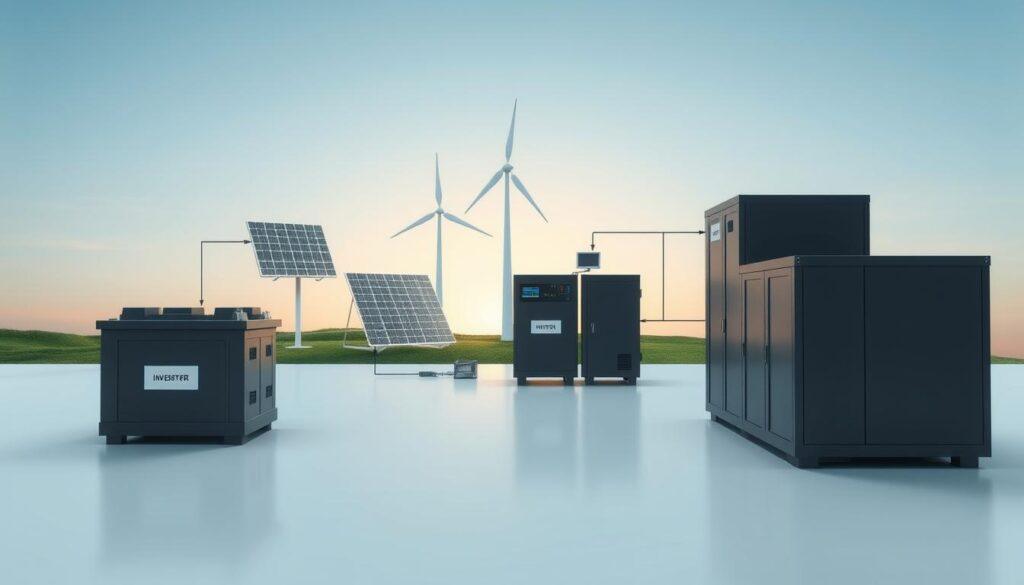
Act Two is the waiting game. The energy waits, ready to be used. This isn’t just waiting. It’s strategic preparation. The quality of this storage phase depends on the battery’s health and the system’s smarts. The energy is waiting for its moment.
The final act, Act Three, is the payoff. When demand is high or the renewables are low, the system acts. The inverter changes DC back to AC. Our stored power flows into the grid. It’s the smart sell at the right time. This balances the ups and downs of renewable energy.
The real magic is in the battery cells and the brain, the software. An Energy Management System (EMS) makes quick decisions. It decides when to charge or discharge, balancing everything.
This isn’t just a simple switch. It’s a complex game of electron trading. The EMS works like a chess master, planning ahead. For more on this, check out the basics of battery energy storage.
So, next time you turn on a light powered by yesterday’s breeze, think about the dance. Capture, hold, release. It’s a mix of physics, chemistry, and smart thinking. The battery storage system doesn’t just store power. It stores time, the most valuable thing of all.
Application Scenarios
Choosing the right battery storage is like picking the perfect tool for a job. You wouldn’t use a sledgehammer to hang a picture frame. Each scenario needs a specific approach, a tailored energy solution that fits like a glove. Forget one-size-fits-all thinking.
The suburban homeowner seeks resilience. This is a modern-day essential for keeping lights and Wi-Fi humming during outages.
For the factory manager, it’s a financial shield. Battery systems dodge crippling “demand charges” through load shifting. This avoids peak tariffs with the grace of a matador. It’s not just about savings—it’s about survival in today’s volatile energy markets.
Then we scale up. Industrial applications transform entire operations. Ports electrify massive cranes. Mining sites ditch diesel generators.
Here, Battery Energy Storage Systems (BESS) provide more than savings. They offer existential energy security in places where power failure means production halts.
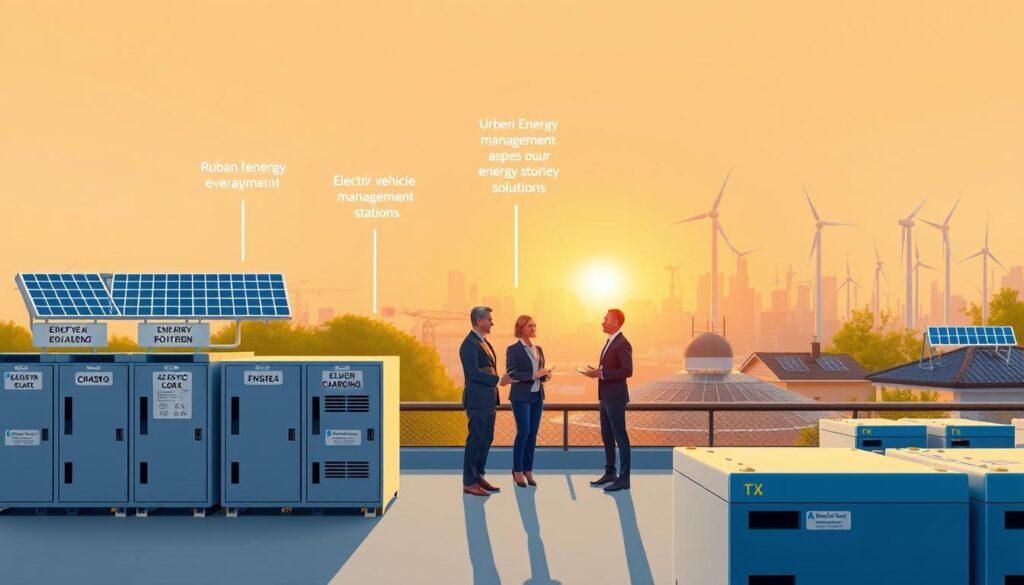
The most fascinating scenario? The microgrid. Picture a university campus, a military base, or a remote island community. A microgrid with integrated BESS can “island” itself from the main grid’s drama. It’s a declaration of energy independence. This small, smart grid says, “Your instability is not my problem.”
Let’s break down the major application arenas. Residential users deploy batteries for self-consumption and backup power. It’s personal energy autonomy. Commercial operations use them for peak shaving—slicing the top off expensive energy demand spikes. Industrial facilities need high-capacity solutions for both backup and continuous process support.
Containerized systems offer mobile, plug-and-play solutions. They’re the energy world’s Swiss Army knives. Off-grid communities rely on them for 24/7 power where traditional grids can’t reach. And at the largest scale, grid-scale BESS performs the critical ballet of balancing supply and demand across entire regions.
The combination of solar plus BESS deserves special mention. It’s the dynamic duo enabling true 24/7 renewable supply. Sunlight by day, stored energy by night. This pairing is revolutionizing how we think about grid integration and energy independence.
| Application Scenario | Primary Use Case | Key Benefit | Typical Scale |
|---|---|---|---|
| Residential | Self-consumption, backup power, energy autonomy | Resilience during outages, reduced electricity bills | 5-20 kWh |
| Commercial | Peak shaving, load shifting, demand charge management | Significant cost savings on utility bills | 50-500 kWh |
| Industrial | High-capacity backup, process continuity, microgrid support | Operational security, reduced downtime costs | 1-10 MWh |
| Microgrid/Off-Grid | Islandable power systems, remote community electrification | Energy independence, reliability in isolated locations | 100 kWh-5 MWh |
| Grid-Scale | Frequency regulation, renewable integration, capacity services | Grid stability, enables higher renewable penetration | 10-100+ MWh |
Commercial and industrial applications often overlap in practice. Both use battery storage for financial optimization. They shift energy consumption from expensive peak periods to cheaper off-peak times. This load shifting is like buying groceries on sale instead of at midnight convenience store prices.
Containerized BESS solutions deserve their own spotlight. These mobile units deploy quickly to disaster zones, temporary events, or construction sites. They’re the energy equivalent of a pop-up restaurant—fully functional, self-contained, and ready to serve power wherever needed.
Ultimately, understanding these application scenarios helps us see battery storage not as a monolithic technology, but as a versatile toolkit. Each tool solves specific problems. The homeowner’s resilience battery and the grid operator’s massive BESS may share chemistry, but they serve completely different masters in our evolving energy ecosystem.
Latest Innovations
Lithium-ion batteries were the stars of the 2010s. Now, solid-state technology is ready to take over. This new tech promises to change how we store energy.
The solid-state battery aims for higher safety and more power. It uses solid materials instead of liquid, making it safer and more powerful. This is a big change in battery design.
Flow batteries are also making waves. They’re great for storing energy for long periods. This is key for using solar and wind power even when it’s cloudy.
Artificial intelligence is making Energy Management Systems smarter. These systems predict energy needs based on weather and prices. They turn batteries into smart grid helpers.
Your battery can now make money. With the right setup, it can sell power when prices are high. This changes how we think about storage.
Rules are starting to support this new way of thinking. The EU and U.S. are creating policies to help storage grow. This includes tracking the sunshine status of energy policies.
The market for storage is growing fast. Costs are falling, and more renewables are coming online. While lithium-ion is big now, solid-state and others are coming up.
Innovation is happening in many areas. It’s not just about new tech. It’s also about smarter rules and better ways to make money. The future of batteries is looking bright and smart.
Deployment Considerations
So you’re sold on the vision. Now comes the part where you write the check. Deploying a battery energy storage system isn’t like buying a trendy gadget. It’s a strategic infrastructure play with a price tag that can make your eyes water.
Residential setups can run from $9,500 to $19,000 per kilowatt-hour. The financial case hinges on load shifting and peak shaving to slash your utility bills. But the return on investment demands meticulous optimization.
Think of it as adopting a high-maintenance pet with a finite lifespan. These systems require expert care. They degrade. You’ll need a plan for that eventual recycling to avoid turning your green dream into an environmental liability. This isn’t a set-it-and-forget-it purchase.
The key question is what you need it to do. Are you just trying to dodge a two-hour peak demand charge each afternoon? Lithium-ion batteries from companies like Tesla or LG Chem are your speedy sprinters.
Need to store excess wind power for days or weeks? That’s the marathon event, where long-duration contenders like vanadium flow batteries enter the race. The chemistry of flow batteries offers distinct advantages for these extended applications.
Ultimately, deployment is a calculated bet. You’re investing in a personal energy philosophy, wagering on future price volatility and grid reliability. It requires the cold-eyed analysis of a chess master and the patience of a gardener. Get the calculus right, and you’re not just saving money. You’re rewriting your relationship with the grid.