The landscape of power generation in the Midwest is undergoing a structural transformation. CEJA mandates a carbon-free grid by 2050. Consequently, developers are building infrastructure of unprecedented scale. Localized rooftop and community solar installations surged first. Now, this movement has evolved into massive, utility-scale mega-ventures.
Tracking Illinois clean energy projects in 2026 requires looking beyond incremental additions. Furthermore, hitting the state’s aggressive renewable targets requires major shifts. Developers are deploying gigawatt-scale solar farms and repurposing coal infrastructure. Understanding this pipeline reveals our actual progress. It shows if we can meet mid-century zero-emission goals.
The Shift To Mega-Scale Utility Solar
For years, the narrative surrounding Illinois clean energy focused heavily on distributed generation and community solar. Those programs remain vital for equitable access. However, utility-scale developers are now doing the heavy lifting for grid decarbonization. We are seeing a distinct shift toward sprawling, multi-phase projects. These sites span thousands of acres and require massive capital.
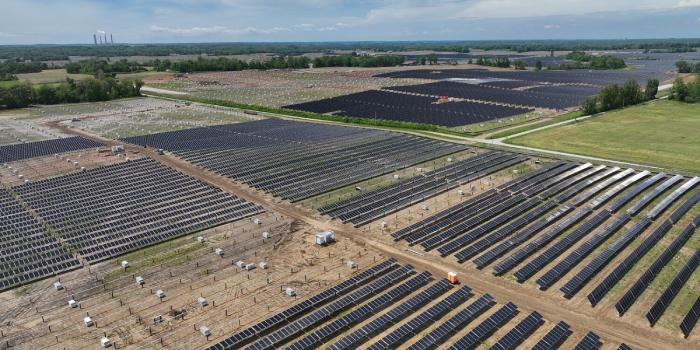
The most prominent example currently moving through the pipeline is the Steward Creek Solar project in Lee County. Specifically, it boasts a planned capacity of 1.56 gigawatts (GW) across 9,500 acres. This makes it a national giant. The project recently secured its interconnection agreement. Construction will start in 2027. Ultimately, it will generate 1.3 terawatt-hours annually. Therefore, developers are no longer just testing the waters in Illinois. They are building foundational pillars for the future grid.
To contextualize this boom, consider the state’s largest active and planned solar projects:
| Project Name | County | Planned Capacity | Status / Energization |
| Steward Creek Solar | Lee | 1,560 MW | Construction starts 2027 |
| Double Black Diamond | Sangamon / Morgan | 800 MW | Energized (Operating) |
| Owens Creek Solar | DeKalb | 500 MW | Planned for 2028 |
| Pulaski Solar | Pulaski | 405 MW | Under Construction (2026) |
| Big Muddy Solar | Jackson | 124 MW | Under Construction (2026) |
Replacing The Coal Backbone With Renewables
A critical strategy for accelerating deployment is the redevelopment of legacy fossil-fuel sites. Building on retired coal plants bypasses complex logistical hurdles. Specifically, developers can utilize existing transmission infrastructure and grid interconnects.
In southern Illinois, Vistra’s 405-megawatt Pulaski Solar Facility serves as a blueprint for this transition. Representing a $650 million investment, the project is being constructed near the recently retired EEI-Joppa Power Plant. A new 8-mile transmission line connects directly to the Joppa site. Consequently, the project avoids severe greenfield interconnection backlogs. Moreover, this brownfield reclamation sustains local tax bases. It also supports the Illinois green collar workforce.
Powering Municipalities And The Corporate Sector
The financial viability of these installations relies heavily on long-term power purchase agreements (PPAs). Major municipalities and corporations sign these. For instance, consider the recently energized Double Black Diamond Solar project. This 800 MW facility spans Sangamon and Morgan counties. It perfectly illustrates how corporate and municipal demand bankrolls the grid’s physical transition.
It is the largest operating solar facility east of the Mississippi River. Additionally, it utilized American-made components and union labor. Today, it supplies power to high-profile corporate clients like CVS Health, State Farm, and Loyola University Chicago. Most notably, the facility powers the City of Chicago. Chicago now sources 100% of its municipal power from renewable energy. Municipalities leverage their massive operational load to underwrite utility-scale solar. This drastically accelerates the deployment timeline for statewide infrastructure.
Navigating The Interconnection Hurdle
Despite the explosive growth and available capital, the physical realities of the power grid remain the primary bottleneck. Generating gigawatts of clean power is only half the equation. Moving that power to urban load centers requires robust transmission. Specifically, the network must handle intermittent, high-capacity loads.
Projects frequently face multi-year delays waiting for grid operators like MISO and PJM to approve their interconnection requests. Recent reforms aim to clear this backlog. However, the clean energy transition depends entirely on upgrading transmission lines quickly. Substations must also be upgraded to accept this new power. Until the grid is modernized, constraints will remain. Illinois’ multi-gigawatt pipeline is limited by its own outdated wires.
The Bottom Line
The pipeline of Illinois clean energy projects in 2026 proves a key point. The state has bypassed the pilot phase. Developments like the 1.56 GW Steward Creek project are underway. Similarly, coal infrastructure in Pulaski County is being repurposed. Therefore, the focus has shifted entirely to mega-scale execution.
Interconnection delays remain a formidable challenge. Nevertheless, aggressive state policy and corporate purchasing power are driving progress. Vast utility-scale engineering is steadily cementing a new, zero-carbon foundation.