Calling a battery bank “smart” might seem like giving a brick a PhD. So, what’s the real diploma here?
The real magic isn’t just in holding power. It’s in the conversation. Think of the difference between a library and the internet. One is a silent warehouse. The other is a living, arguing, ever-evolving network.
Today’s intelligent energy systems are like that network. They get a brain from Artificial Intelligence and the Internet of Things (IoT). This isn’t just automation. It’s situational awareness.
These setups listen and learn. They use real-time data and predictive analytics to talk to the entire grid. Your electric vehicle isn’t just a car anymore. With Vehicle-to-Grid tech, it becomes a storage resource that could, theoretically, help pay for your morning coffee.
The “smart” label is earned through predictive prowess and this constant, digital chatter. It’s about creating a symbiotic relationship between supply, demand, and the hardware in between. For a deeper dive into what smart storage really is, look at how the perfect marriage of software and hardware creates a seamless, talking ecosystem.
Sensors and Data
Forget the clipboard-wielding technician of old. Today, energy intelligence comes from digital whispers. These whispers are from a network of IoT sensors, turning the Internet of Things into a central nervous system.
These sensors act as loyal informants, like canaries in a digital coal mine. They talk nonstop about everything: solar panel output, wind turbine vibrations, battery temperatures, and humidity. A single shaded panel can send out an SOS before anyone notices a graph blip. It’s not just monitoring; it’s a live health report.
We’ve left behind the days of scheduled site visits. Now, we track performance and conditions in real-time. This data stream powers predictive maintenance. A small vibration change can warn of bearing failure weeks early. A temperature spike in batteries can be caught before it turns into a problem. This is IoT’s power—turning reactive fixes into proactive management.
Think of this data as the difference between reading a history book and watching live news. Without it, AI and optimization engines are blind. It’s like teaching a chess grandmaster without showing them the game’s moves. The “smart” in smart storage comes from this data, which is the foundation of all insights.
This layer of sensor data is key for advanced smart storage systems data management. The constant chatter isn’t just noise; it’s the start of a smarter conversation.
Real-Time Optimization
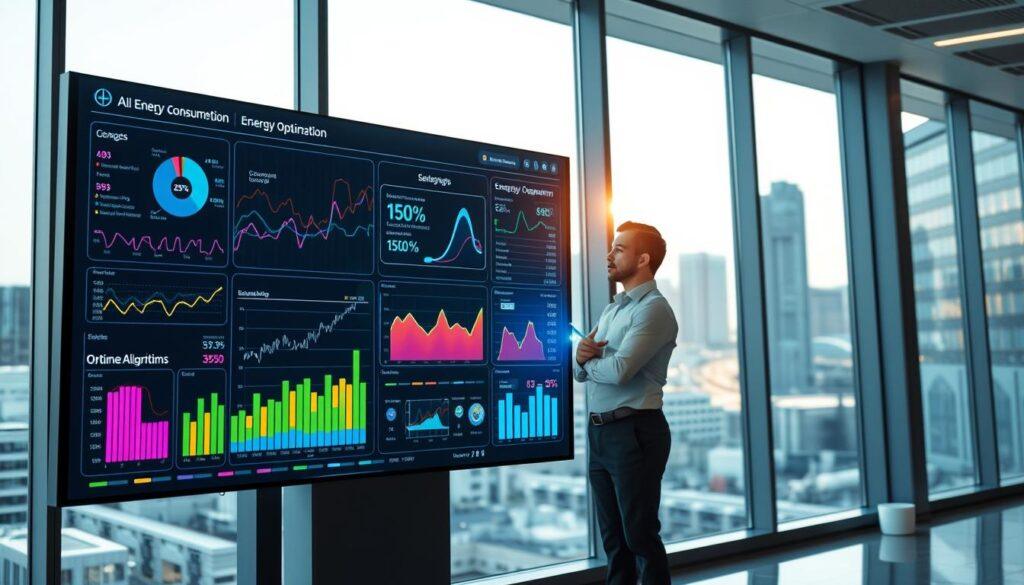
Sensors are like the gossip columnists of the energy world. Real-time optimization is the editor turning that gossip into headlines. It’s not about fixed schedules; it’s a live performance with solar panels, wind turbines, and electric vehicle batteries.
The AI is the conductor. It listens to data in real-time, adjusting things quickly. This isn’t just reacting; it’s proactive, elegant problem-solving.
Imagine a DJ remixing a track live. The crowd’s energy is like the grid’s load. A sudden demand spike is like a bass drop. The AI adjusts everything in real-time to keep things perfect.
Vehicle-to-grid (V2G) technology lets your parked EV help the grid. When solar output drops, the AI asks your car to send energy back. This stabilizes the network without you doing anything.
Inside buildings, AI-driven energy management gets even more personal. Systems use sensors and forecasts to adjust before you feel uncomfortable. An empty room? The HVAC turns down. A sunny day? The lights dim. It saves energy without sacrificing comfort.
This leads to a personalized energy economy. Your home’s AI could save so much that it pays for something you want. It’s a shift from just paying bills to having a strategic partner at home. Research in AI-optimized systems shows this is real, not just science fiction.
In essence, real-time optimization turns AI into an active strategist. It balances supply and demand in real-time, not on a spreadsheet. It’s a high-stakes ballet that keeps our lights on and our wallets a little heavier.
Implementation Steps
The gap between a great idea and a working solution is not just about hoping. It’s about following a detailed plan. Let’s take the journey from a simple idea to a real, efficient system. Forget the hype; this is where your smart storage vision meets reality.
Start by asking the tough questions. Why do you want to save money, improve the grid, or make customers happier? Buying tech just for the sake of it is like buying a Formula 1 car for grocery shopping. It’s impressive but impractical and wastes money. Define what problem you’re trying to solve. This keeps your decisions focused.
Next, don’t rush into buying sensors. Look at the data you already have. Your first AI project should be to analyze this data. Find patterns, predict trends, and show its value. This turns your existing data into a valuable asset, saving you from buying new hardware too soon.

Then, choose your team carefully. You’re not alone in this journey. You need people who know how to manage IoT devices and save energy. Work with experts like Axceta or specialized firms. They’re like Sherpas for your project, guiding you through challenges.
Remember, there are key best practices to follow. Invest in scalable IoT infrastructure as the backbone of your system. Focus on data security from the start; a breach can ruin everything. And always keep improving. The system you launch is just the beginning.
| Phase | Core Action | Common Pitfall | Success Metric |
|---|---|---|---|
| 1. Define & Align | Articulate the specific business value and problem statement. | Vague goals leading to feature creep and scope bloat. | Clear ROI projection and stakeholder buy-in. |
| 2. Assess & Leverage | Audit and utilize existing historical data assets before new capex. | Over-investing in new sensors without proving data value first. | Actionable insights generated from legacy data. |
| 3. Partner & Deploy | Select expert partners for secure, reliable integration and management. | Underestimating the complexity of IoT security and system reliability. | On-time, on-budget deployment with robust uptime. |
Implementation is where dreams meet reality. It’s a disciplined journey, not a magic trick. Follow this plan, and your smart storage solution won’t be a waste of money. It will be a valuable asset that starts paying off from day one.
Future Innovations
The future of smart storage is changing. It won’t just sit there quietly. Instead, it will talk and work with you. Buildings will manage themselves, using new tech to share energy.
Your home might even talk to your neighbor’s solar panels. It’s like a smart energy market. This is not just a dream; it’s what’s coming.
Imagine a place where power trades hands in seconds. Your AI assistant will chat with you. “Hey, get ready for my party with the cheapest green energy.” It’s not science fiction; it’s the next step in tech.
This new world needs strong foundations. Coordinated grid planning is building those. And security will get a boost, with new ways to keep our systems safe.
So, what happens? Storage becomes the smart, talking heart of our energy systems. It’s a big win for sustainability: strong, smart, and almost invisible.