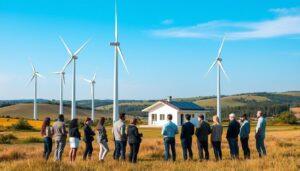
Imagine the power grid Thomas Edison started over a century ago. It’s been a one-way system ever. Utilities make power, we use it, and hope the old system works.
But now, there’s a new twist. It’s called distributed storage. It’s not just a battery in your home. It’s the start of a new energy world, making every place a power plant.
Energy storage is key. It captures, keeps, and gives back power. This is why the world is working hard to make it better, aiming for 1,500 gigawatts by 2030.
This change is like moving from big mainframes to personal computers. Now, you have control. It’s the smart way to deal with climate change and more people needing power. Learn about modern distributed storage systems to understand it better.
Technologies and Use Cases
The quest for grid resilience has led to many solutions. From liquid energy to concrete ballet, each solution is unique. The modern distributed storage toolbox has many specialized tools, each playing a different role in the energy symphony.
Let’s look at the band. Lithium-ion batteries are everywhere, from cars to laptops. They’re the quick responders, perfect for fast needs.
Then, there are the unique members. Vanadium redox flow batteries store power in liquid tanks. They’re the long-distance runners, great for long storage. Mechanical storage uses solar power to lift heavy blocks, then generates electricity by lowering them. This is Energy Vault’s gravity storage system (GESS).
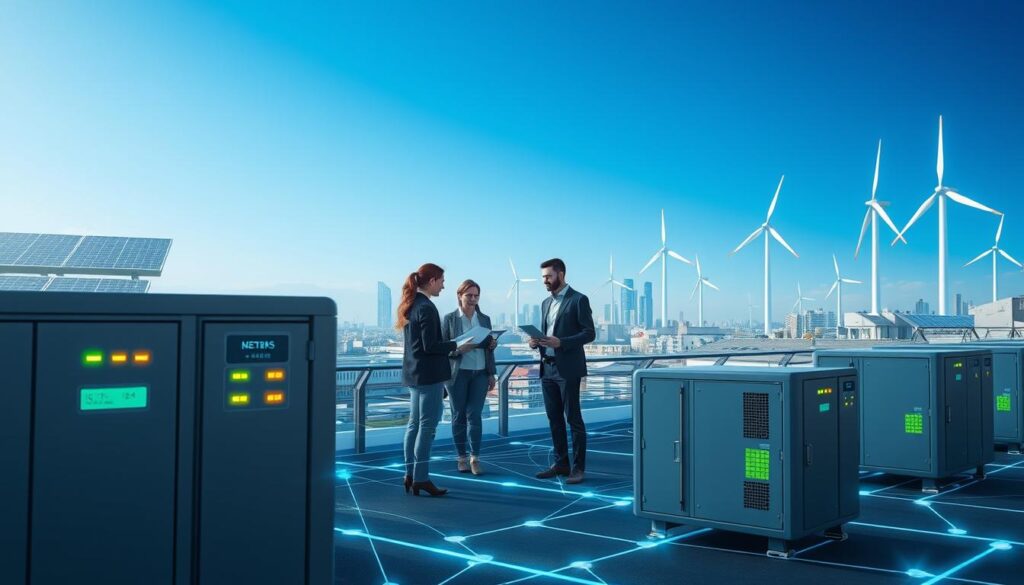
Other innovators use compressed CO2 (Energy Dome) or molten salt for thermal storage. Each technology has its own strengths—cost, duration, scalability. They fit different grid needs.
So, what’s the purpose of this tech? It balances the renewable rollercoaster. It stores excess solar power during the day and releases it at night when demand is high.
This tech also fights a costly grid relic: peaker plants. These plants run only a few dozen hours a year. They are the definition of inefficient capital. A network of distributed storage can make these plants unnecessary.
The ultimate goal is the Virtual Power Plant (VPP). Here, software is the star. Companies like Eguana provide the power electronics and cloud-based software. This software manages thousands of batteries to act as one big power plant.
This VPP can sell services to the grid, making money for owners. It provides stability without building new plants. It’s a mix of physical hardware and digital smarts.
| Technology Type | How It Works (The Simple Version) | Scale & Duration | Best For |
|---|---|---|---|
| Electrochemical (Lithium-ion) | Like a super-sized, grid-tied version of your phone battery. Ions shuttle between electrodes. | Medium to Large Scale; Hours | Frequency regulation, rapid solar smoothing, short-duration backup. |
| Electrochemical (Flow Battery) | An energy wine cellar. Power is stored in liquid electrolyte in external tanks. | Very Large Scale; Many Hours to Days | Long-duration storage for wind/solar farms, industrial microgrids. |
| Mechanical (Gravity) | A high-tech crane game. Uses motors to stack heavy blocks, generates power on the drop. | Utility Scale; Hours | Providing inertia and bulk energy time-shifting in renewable-heavy areas. |
| Mechanical (Pumped Hydro) | The original champion. Pumps water uphill to a reservoir, releases it through turbines later. | Massive Scale; Many Hours | Seasonal and weekly energy storage, where geography allows. |
| Thermal | Stores energy as heat (or cold) in materials like molten salt or ice for later use. | Commercial/Industrial Scale; Hours | Directly decarbonizing heating/cooling for large buildings and industrial processes. |
The table shows there’s no single solution. A resilient grid will likely use a mix. Lithium-ion might handle quick changes, while flow batteries handle longer needs.
The magic happens when these assets are combined. Cloud-based software sees a battery as a grid service. It can send that service where it’s needed most, whether to prevent overload or to sell in the wholesale market.
This is the real promise of distributed storage. It turns passive consumers into active grid players. It changes power flow from one-way to dynamic and efficient. The technology is the vehicle, but the VPP is the traffic control that makes it all work.
Benefits for Communities
The real magic of distributed storage isn’t just in the batteries; it’s in the community bonds it forges. It’s like moving from a feudal energy system to a cooperative town square. The benefits are tangible, immediate, and quietly revolutionary.
First, let’s talk about security. When the central grid fails, a community with a robust microgrid doesn’t just sigh and light candles. Critical facilities like hospitals, schools, and cooling centers stay online. This isn’t a hypothetical; it’s the lesson from California’s wildfire seasons, where long transmission lines became liabilities. Distributed storage acts as a local energy airbag, deploying power precisely where and when it’s needed most.
Then there’s the wallet factor. Traditional utilities charge a premium during peak demand, a sort of surge pricing for electrons. A localized network flattens that curve. By storing cheap solar power from the afternoon and using it at night, communities can achieve significant cost efficiency. You’re not just avoiding high bills; you’re fundamentally redesigning the economics of energy in your neighborhood. For a deeper dive into the financial upside, explore the benefits of distributed energy generation.
This leads to the most intriguing possibility: the peer-to-peer grids. Imagine selling your rooftop solar surplus directly to your neighbor who’s running their AC, bypassing the traditional utility middleman. It turns energy from a commodity into a social transaction, a modern-day barn raising for the digital age. This model boosts local energy resilience and reduces dependency on creaking central infrastructure.
But hardware and software are useless without people. As experts like Brent Harris note, this transition creates a booming demand for skilled electricians, engineers, and technicians. The green jobs revolution isn’t a vague slogan; it’s a wiring diagram for a new workforce. Communities investing in this future are also investing in local, high-skill careers.
Lastly, the environmental benefit is a collective win. By facilitating the integration of more wind and solar, distributed storage slashes carbon emissions at the local level. It’s a direct line from your community’s choices to cleaner air and a more stable climate.
In essence, distributed storage transforms residents from passive ratepayers into active stakeholders. It provides grid stability, democratizes costs, creates jobs, and seeds a new culture of energy independence. The power, quite literally, shifts to the people.
Building a VPP
Building a VPP is like putting together a flash mob for the grid. It needs thousands of units ready to act together. There’s no big ceremony or trucks needed. The work happens in a server farm, with plans written in code.
This process involves three main parts. It’s like a mix of hardware, software, and money matters.
The Hardware Layer: The Distributed Fleet
First, you gather the assets. A VPP combines many storage units. It’s not one big battery but a group of home batteries, solar panels, and electric vehicles. Each unit works together to keep the grid stable.
The Brain Layer: The Cloud Conductor
The “virtual” part comes alive here. A smart software platform is the brain. It connects all units to manage the grid. It sees problems and fixes them fast, without anyone noticing.
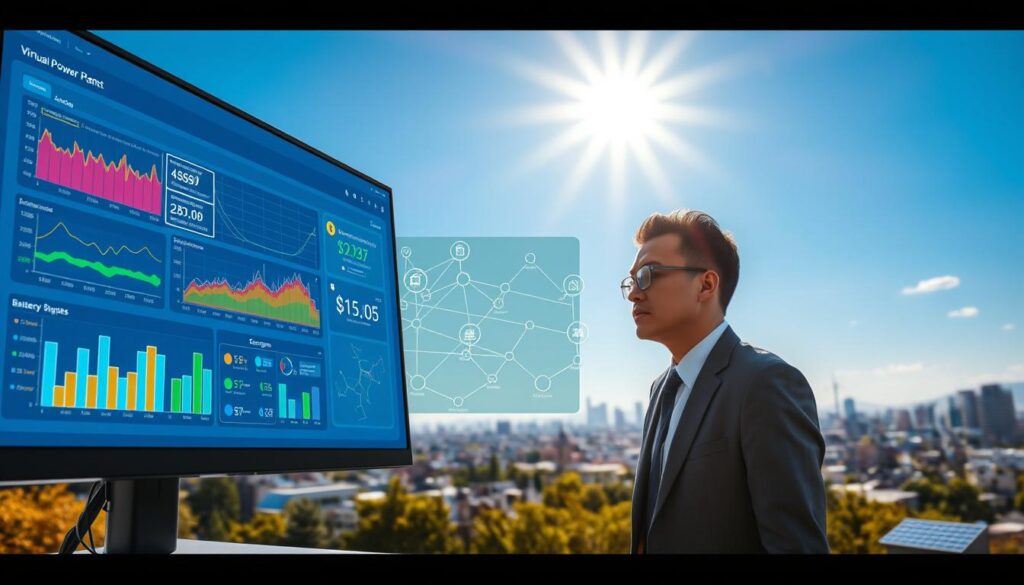
The most important part is the money side. Without a way to pay, it doesn’t work. This layer sets the rules for making money from grid services. It’s where peer-to-peer grids meet big stability needs. Utilities create new deals for how and when to use a battery, and how much to pay for it.
This setup is key for growing VPPs, as shown in Virtual Power Plants. It makes a technical idea work in real life.
So, what’s different from old ways? Here’s a comparison.
| Layer | VPP Component | Traditional Power Plant Equivalent | Key Difference |
|---|---|---|---|
| Hardware | Distributed fleet of batteries & inverters | Centralized turbine, generator, boiler | Geographically scattered vs. single location |
| Software | Cloud-based fleet management platform | Human-operated control room | Automated, real-time optimization vs. manual dispatch |
| Market | Dynamic contracts & peer-to-peer energy trading | Long-term power purchase agreements | Flexible, granular payments vs. bulk, fixed-rate sales |
The result is a power plant that’s mostly in the cloud. It can grow bit by bit. It’s more flexible and strong than old power plants. When it’s hot and the grid is stressed, the VPP quickly helps out. It’s a smart way to fix old systems.
Regulatory Considerations
If technology builds the highway, regulation writes the traffic laws. For distributed storage, our regulators are slow to catch up.
Analyst Harris notes a strange issue. In many places, your home battery is charged and then penalized. It’s like being taxed for both inhaling and exhaling.
There’s a bigger issue at play. Should old utilities own VPP assets? They have the money for grid upgrades. But does this stifle new peer-to-peer grid ideas?
Big goals, like the COP29 aim for 1,500 GW of storage by 2030, seem exciting. Yet, they’re far from local rules. Promises of support policies are made, but action is slow.
The future of a strong grid depends on new rules. We need to encourage flexibility, not keep old monopolies. The tech for distributed storage is here. The market for VPPs is eager. Now, we just need the rules to change.