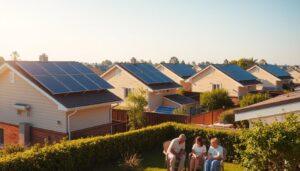
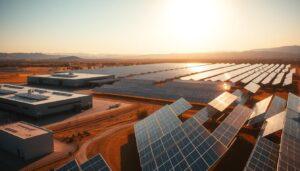
Southern Illinois has long been tied to coal. For generations, mining shaped the region’s economy, workforce, and identity. Now, a new chapter is unfolding. Through a joint venture between RWE and Peabody Coal, the Sunflower Projects aim to transform reclaimed coal mine land into more than 750 megawatts (MW) of solar generation and battery storage.
Built atop the reclaimed Gateway and Friendsville mines, this ambitious initiative represents one of the most symbolic clean energy transitions in the Midwest — turning legacy fossil fuel sites into renewable power hubs.
From Coal to Clean Energy
Coal mining once powered Illinois’ economy and much of its electric grid. But as energy markets shifted and environmental policies evolved, many mines closed, leaving behind vast tracts of reclaimed land.
Rather than allowing these sites to remain underutilized, developers are reimagining them as renewable energy platforms.
The Sunflower Projects demonstrate how former coal infrastructure can:
- Support large-scale solar generation
- Host battery energy storage systems
- Create new economic opportunities
- Preserve energy-sector jobs in transitioning communities
Project Overview: Scale and Scope
The Sunflower Projects are designed to deliver over 750 MW of combined solar and storage capacity — placing them among the largest renewable initiatives in Illinois.
Key Highlights
- Developers: RWE and Peabody Coal (joint venture)
- Location: Southern Illinois
- Sites: Reclaimed Gateway and Friendsville mines
- Total planned capacity: 750+ MW
- Components: Solar photovoltaic (PV) arrays and battery storage
At this scale, the projects could supply electricity to hundreds of thousands of homes annually, depending on demand patterns and operational conditions.
Why Reclaimed Mines Are Ideal for Solar
Former coal mines present unique advantages for renewable development.
1. Large, Contiguous Land Areas
Utility-scale solar projects require significant acreage. Reclaimed mine lands often provide:
- Expansive, cleared terrain
- Minimal competing land uses
- Limited agricultural value
This makes them ideal candidates for large solar installations.
2. Existing Energy Infrastructure
Coal mining regions frequently have:
- Transmission lines
- Substations
- Industrial access roads
Leveraging existing infrastructure reduces development costs and accelerates grid interconnection.
3. Environmental Remediation Synergy
Reclaimed mines are already subject to environmental stabilization efforts. Solar installations:
- Require limited soil disturbance
- Can coexist with capped or graded land
- Support long-term monitoring
Rather than reintroducing heavy industry, solar generation offers a low-impact land use that complements reclamation goals.
The Role of Battery Storage
A key feature of the Sunflower Projects is the integration of battery energy storage systems (BESS).
Why Storage Matters
Solar power generates electricity during daylight hours. Battery storage allows excess generation to be:
- Stored for evening demand
- Dispatched during peak pricing periods
- Used to stabilize grid frequency
By pairing solar with storage, the projects become more flexible and grid-responsive.
Supporting Grid Reliability
Large battery systems can:
- Smooth out renewable variability
- Provide fast-response power
- Reduce reliance on natural gas peaker plants
This combination enhances both environmental performance and system reliability.
Economic Impact for Southern Illinois
The transition from coal mining to renewable energy raises understandable concerns about job displacement. Projects like Sunflower aim to address that challenge.
Construction Employment
Building 750+ MW of solar and storage infrastructure requires:
- Skilled trades
- Electrical contractors
- Equipment operators
- Engineers and project managers
Many of these roles align with transferable skills from the energy sector.
Long-Term Operations
While renewable facilities require fewer permanent staff than mines, they still provide:
- Maintenance roles
- Site monitoring
- Security
- Vegetation management
In addition, local governments benefit from new property tax revenues that can support schools and public services.
A Symbolic Energy Transition
Few projects carry the symbolic weight of building renewable energy directly atop former coal mines.
The Gateway and Friendsville sites once extracted fossil fuels that powered homes and industries. Now, those same landscapes will generate emissions-free electricity.
This shift reflects:
- Market-driven energy evolution
- Policy commitments to decarbonization
- Technological advancements in solar and storage
It also signals that clean energy growth does not have to bypass communities historically tied to fossil fuels.
Environmental Benefits
Transforming coal mine land into solar facilities delivers multiple environmental advantages.
Reduced Emissions
Replacing fossil generation with solar energy significantly lowers:
- Carbon dioxide emissions
- Sulfur dioxide
- Nitrogen oxides
- Particulate pollution
Land Stabilization
Solar development often involves:
- Vegetative ground cover
- Erosion control
- Managed drainage systems
These measures can complement long-term land reclamation strategies.
Challenges and Considerations
Projects of this magnitude face logistical and regulatory complexities.
1. Grid Interconnection
Large renewable installations require transmission capacity. Coordinating interconnection studies and infrastructure upgrades can take years.
2. Community Engagement
Developers must work closely with local stakeholders to ensure transparency and address concerns related to land use and economic transition.
3. Market Conditions
Wholesale electricity markets fluctuate. Long-term power purchase agreements (PPAs) and policy stability are critical to financing projects at this scale.
Despite these challenges, the partnership between RWE and Peabody signals strong confidence in the viability of mine-to-solar redevelopment.
A Blueprint for Coal Community Revitalization
The Sunflower Projects could serve as a national model for coal-region revitalization.
Across the United States, thousands of acres of reclaimed mine land remain underutilized. Converting these areas into renewable energy hubs offers a pathway to:
- Preserve energy-sector employment
- Repurpose existing infrastructure
- Accelerate decarbonization
Illinois, with its combination of transmission capacity and supportive policy frameworks, is well positioned to lead this transition.
The Future of Southern Illinois Energy
As the Sunflower Projects move forward, Southern Illinois may once again become a major contributor to the state’s power supply — this time through renewable generation.
By combining:
- 750+ MW of solar capacity
- Large-scale battery storage
- Reclaimed mine land
the initiative underscores how legacy energy regions can adapt to a changing market.
Conclusion
The Sunflower Projects represent one of the most transformative renewable initiatives in Illinois. By redeveloping the reclaimed Gateway and Friendsville coal mines into over 750 MW of solar and battery storage, RWE and Peabody Coal are redefining what energy transition looks like in Southern Illinois.
Rather than abandoning former coal communities, this project reinvests in them — turning landscapes once defined by extraction into engines of clean power generation.
As Illinois advances toward deeper decarbonization, mine-to-solar developments like Sunflower may become a cornerstone of both environmental progress and economic renewal.