When we talk electric vehicles, we often highlight the cool features. We mention instant torque and silent acceleration. But the real hero is the battery under the floor.
Your EV’s battery is more than just a place for electrons. It’s like a Swiss Army knife for the grid. It can charge up with wind power while you sleep. Then, it can power your home when it’s needed most or even help the local grid during peak times.
This isn’t just a dream. It’s called Vehicle-to-Grid (V2G) and Vehicle-to-Home (V2H). Your EV’s battery can hold 50 to 100 kilowatt-hours. That’s enough to power a typical home for days. Your car becomes a part of the bigger energy world.
The biggest change isn’t on the road. It’s how EV batteries and charging infrastructure are changing power.
Fast vs. Slow Charging
Fast charging is like getting an espresso shot, while slow charging is like a pour-over. But our electrical grid wasn’t made for everyone to get fast charges at once. It’s not just about waiting or getting things quickly. It’s about physics, our old power networks, and what we can really do.
Direct Current Fast Charging (DCFC) gives you a quick 10-minute boost. It’s like a fire hose for energy. But, when many EVs charge at once, it’s too much for our grid. It’s like everyone flushing toilets at the same time.
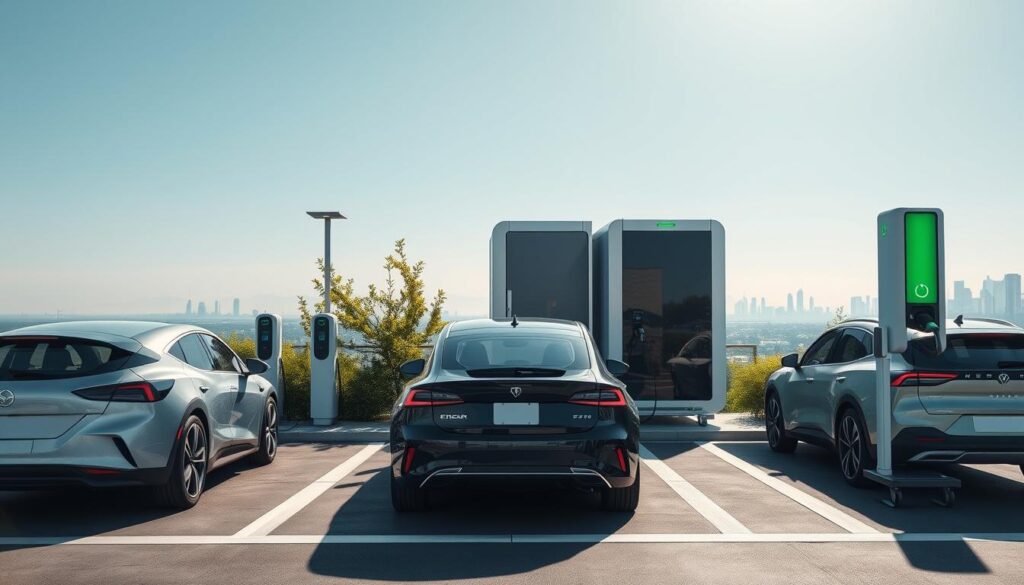
Battery-buffered fast charging is a smart solution. It acts like an energy bouncer for the grid. It stores energy when it’s cheap, like at night, and then gives it out fast when needed.
This method is very smart. It can cut down the grid’s needed power by 50-80%. This means we don’t have to spend a lot on upgrades. The buffer handles the sudden power needs.
There are two main ideas here. The “First Hour” criterion checks if the system can handle a sudden rush of EVs. The battery buffer helps with this. The “Design Day” is the busiest day for the station. The system must be ready for this peak demand.
This method changes how we think about different EV charging methods. Slow charging is great for homes and work. But for busy places, battery-buffered fast charging is better. It’s fast and doesn’t cost too much.
This idea is big for our charging infrastructure. We’re not just adding more plugs. We’re making smarter systems that fit with what we already have. The buffer battery helps balance our need for quick energy with what the grid can give.
This shows how EV batteries are becoming more than just car parts. They’re key to managing our energy flow. The fast versus slow debate is not about choosing one. It’s about using the right method for each situation, with smart engineering.
Battery Management
Your EV’s battery is more than just a power source. It’s a key player in managing energy costs. It’s about buying cheap energy and using it when it’s expensive, with your car as the middleman.
Smart charging is the brain behind this strategy. It helps you avoid expensive power at peak times and use cheap energy when it’s available. Utilities are pushing Time-of-Use (TOU) rates to make this timing important. Charging smart is not just convenient; it’s essential for saving money.
V2G technology adds another layer to this game. Your parked EV can send power back to the grid during peak hours. It’s like your car is earning money. This turns your car into a grid stabilizer, a key part of grid integration strategies.
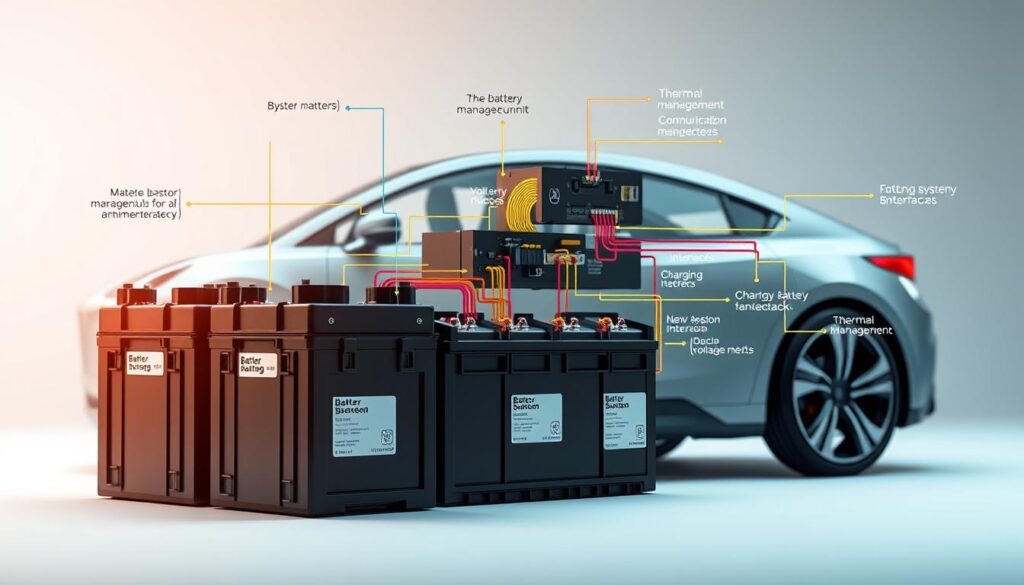
In a commercial setting, the savings grow. This is where Battery Energy Storage Systems (BESS) come in. For businesses with fleets or public charging stations, electricity bills can be a big problem.
Demand charges are like a sin tax on your electricity bill. They charge you for your peak power use all month. A BESS acts like a financial shock absorber. It helps smooth out power spikes by providing energy during high-demand times.
This leads to lower demand charges. For businesses, this isn’t just saving money; it’s a matter of survival. The BESS helps manage loads, preventing expensive spikes and shifting loads strategically.
This load shifting also helps the grid. By using power off-peak and supplying it during peaks, we reduce grid strain during dirty, carbon-intensive hours. Your charging infrastructure becomes part of the solution.
So, managing EV batteries is a team effort with the grid and market. It’s about being financially smart and environmentally responsible. You’re not just filling a battery; you’re playing the market and supporting the system. That’s what I call smart power.
Recycling and Upcycling EV Batteries
Think of an EV battery’s life like a Hollywood career. It starts as a star, then becomes a supporting actor. After 12 to 15 years, these batteries are not done. They’re just getting started.
Most batteries are 70 to 80 percent full. That’s not scrap. It’s a second chance waiting to happen.
Recycling is the usual plan. But it’s expensive and uses a lot of energy. It’s like giving a genius professor a job sorting bottles.
Upcycling is the twist. We give EV batteries a new role. They move from cars to storing energy for buildings.
These batteries become key in Battery Energy Storage Systems (BESS). They store solar power for buildings at night. They also provide backup for hospitals and help balance the grid.
Upcycling is smart. It keeps expensive materials in use longer. It also reduces electronic waste. And it makes energy storage affordable.
| Aspect | Traditional Recycling | Strategic Upcycling | Net Impact |
|---|---|---|---|
| Primary Action | Dismantle & recover raw materials | Repurpose entire battery packs | Preserves manufactured value |
| Cost Profile | High processing energy & labor costs | Lower refurbishment & integration costs | Reduces overall system cost |
| Time to Reuse | Months to years for new battery production | Weeks to months for system integration | Accelerates storage deployment |
| Environmental Footprint | Significant carbon from processing | Minimal additional manufacturing burden | Lowers lifecycle emissions |
| Economic Value | Value of raw materials only | Value of a functioning storage system | Multiplies return on initial investment |
Don’t see an old electric car’s battery as useless. It’s ready for a new role. Moving from cars to grid is a smart move.
This new way of thinking changes how we see EV batteries. They’re not just for cars. They have a second life, powering our homes and businesses.
Innovations in Mobility Storage
The electric vehicle has come a long way. It’s no longer just a battery on wheels. It’s becoming a power plant. Imagine plugging out instead of just plugging in.
Massachusetts is leading the way with its V2X initiative. They’re using bidirectional chargers. These chargers let EVs power homes when the grid goes down or sell energy back to it. Your garage can become a personal power plant.
New perovskite solar panels are making a big difference. They produce a lot more power. Storage systems also work well for thousands of cycles. This is more than just better tech—it’s a smarter energy system.
Charging infrastructure is changing. We’re moving from simple plugs to interactive grids. EV batteries are evolving too. They’re no longer just energy containers but dynamic assets.
The real innovation is connecting EVs to the grid. This turns every parked EV into a grid stabilizer. Our charging infrastructure is evolving. And your car’s battery might be the most interesting power source you own.