For most businesses, the monthly utility bill feels like a ransom note. You pay it without question. What if you could change that?
On-site energy storage, like modern commercial batteries, is a game-changer. It’s like brewing your own coffee instead of buying it at the airport. You get the same energy, but save a lot more.
This isn’t just about being eco-friendly. It’s about being smart. It’s about turning energy into savings. The idea is to buy power when it’s cheap and use it when it’s expensive.
You cut down on high demand charges and create your own power grid. This protects your business from price swings. It’s like having your own power plant, right on site. For more on the benefits of on-site storage, check out these 5 reasons you need on-site storage.
In short, on-site storage turns your energy costs into an asset. Let’s look at how.
Top Technologies
Modern business storage is more than just adding more batteries. It’s about using smart technology to make systems work better. These systems are now like partners, not just simple power banks.
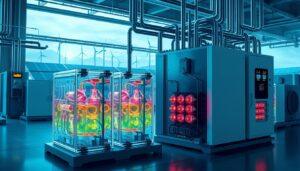
Exro’s Cell Driver™ is a standout. It’s not just a battery management system. It treats each cell as an individual, letting them work at their best. This approach makes systems safer and last longer.
- Charging: The system charges each cell in the best way, avoiding damage.
- Storing: It keeps an eye on cell health, even when not in use.
- Discharging: It uses the healthiest cells for power, ensuring steady performance.
- Managing: It’s always on, managing temperature, predicting needs, and preventing failures.
Now, let’s talk about size. Business storage comes in all shapes and sizes. It can power small businesses or entire campuses.
Here’s what’s available:
| System Type | Capacity Range | Ideal Use Case |
|---|---|---|
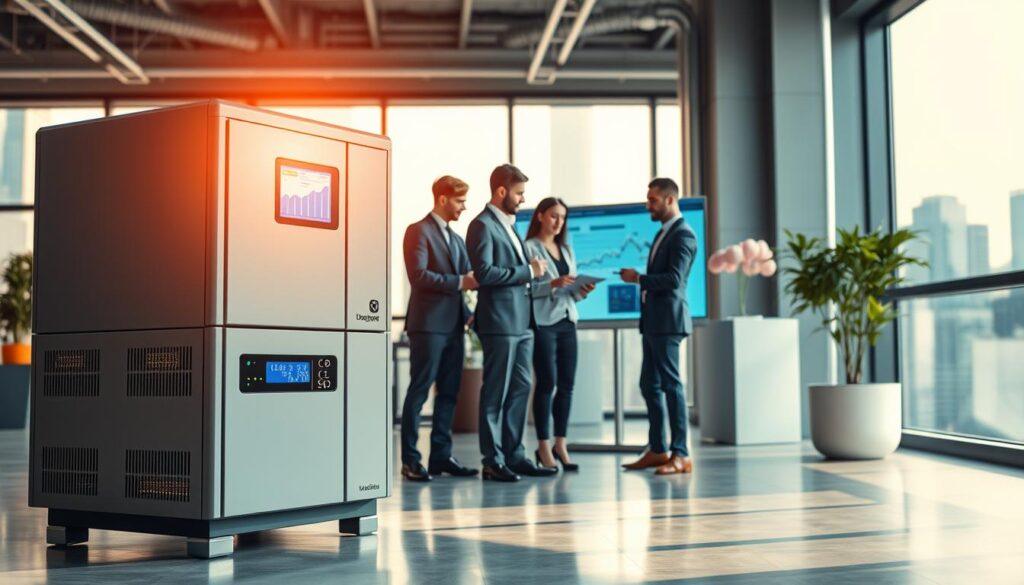
| Fully Integrated Containerized | 200 kWh – 1.7 MWh | Small commercial complexes, remote sites, peak shaving for medium facilities |
| Modular Cabinet-Style | 250 kWh – 2 MWh | Data centers, large retail, municipal buildings requiring flexible expansion |
| Large Industrial-Scale | 2.5 MWh – 5 MWh+ | Heavy manufacturing, utility substations, major renewable integration hubs |
Choosing the right business storage depends on the task. For data centers, it’s about fine-tuning. For remote sites, it’s about reliability.
The key question is: What’s the task? And does the system’s smarts match it? A small cabinet might be perfect for a strip mall, while a large container is needed for industrial sites. Both are smart choices, but for different needs.
The real value in business storage is in its smarts. It’s not just about holding power. It’s about managing it wisely. Your business storage should be a partner, not just a container.
Integration with Solar and Wind
Renewable energy without storage is like having a gourmet kitchen but no fridge. You can cook amazing meals, but keeping them fresh is tough. For C&I operations, this isn’t just a theory. It’s a daily challenge that comes with every sunset and calm breeze.
The sun shines brightest at noon. But what about the midnight shift? Wind turbines often work best at 3 AM. Your office is empty then. This mismatch is not just inconvenient; it’s also costly.
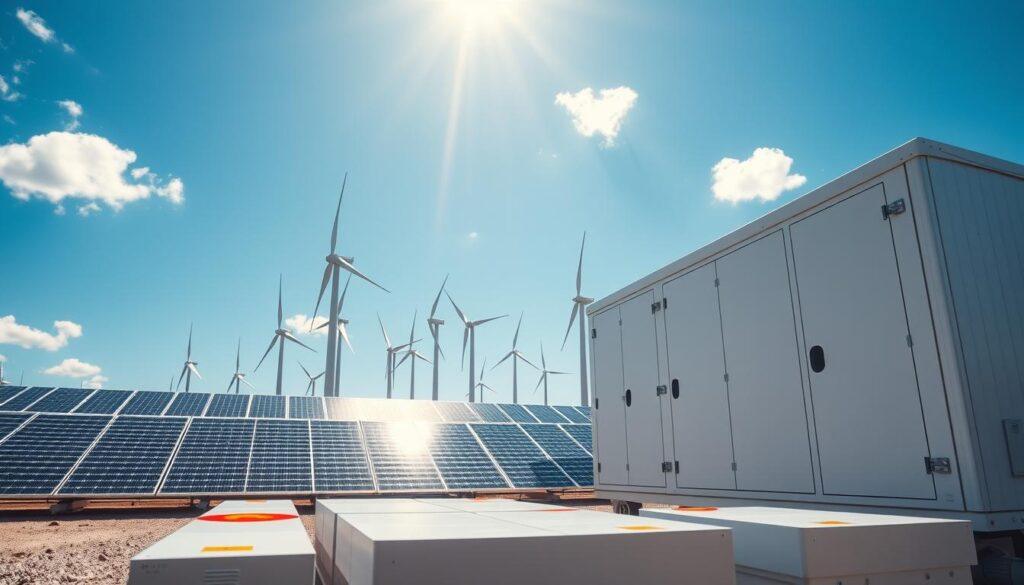
Enter the battery. It’s like a translator for your solar panels and wind turbines. As the Department of Energy notes, storage captures excess energy for later use. Solar energy at night? Now it’s possible.
This makes renewables reliable, not just occasional. No more waiting for sunny days. You generate, store, and use energy as you need it. For C&I, this makes energy supply more stable against nature’s changes.
The positive impact on emissions is clear. Storage helps use more clean energy, reducing reliance on dirty grid power. But from a business view, it’s about saving money. Storage makes energy costs more predictable.
Think of a manufacturing plant with a lot of solar panels. Without storage, excess energy is sold back to the grid at low rates. With storage, that energy powers the evening shift at full price. The savings are clear and quick.
For C&I operators, this is like turning renewable energy into a competitive edge. It’s not just about buying green credits. It’s about making your operations more resilient.
Storage is like the wise elder to renewable energy’s enthusiastic youth. It adds patience and timing that raw generation lacks. In today’s C&I world, this is not just extra infrastructure. It’s essential for success.
Your solar array is more than just a power source with storage. It’s a strategic asset. The same goes for wind. You’re not just hosting clean energy. You’re mastering its flow. This is what leads the energy transition, not just follows it.
Financing Options
Financing your storage system is like choosing between buying, leasing, or subscribing to a company car. Each option has its own financial pros and cons. The upfront cost versus long-term savings is a key decision point.
Today, you have more financing options than ever before. These options match your company’s financial situation and goals. It’s a mix of electrical and financial engineering.
The Capital Expenditure (Capex) model means you own the asset. This approach offers the highest savings over time. You get to keep all the benefits of demand charge reduction and energy arbitrage.
Buying the system upfront is like investing in property. It builds equity in your energy infrastructure. For companies with strong finances, Capex is the best choice for long-term savings.
The Operational Expenditure (Opex) model is a lease or managed service. It keeps your capital free while making storage a predictable monthly cost. The third party handles the equipment.
This model turns a big investment into a regular expense on your P&L. The payments are fixed, and the performance is guaranteed. It’s great for keeping cash flow steady.
The Power Purchase Agreement (PPA) is the most innovative option. A developer installs and operates the system on your property. You just buy the electricity at a set rate, often cheaper than your current costs.
This model is like a Netflix subscription for energy. You get clean, predictable power without the hassle of ownership. The savings start right away, and the developer takes on all the risk. It’s ideal for those who want benefits without the burden.
Each model suits different needs. Capex for the financially strong, Opex for cash flow, and PPA for those who want low risk. The key is that demand charge savings can often cover financing costs.
Turning energy into a value-generating asset is the goal. The numbers are so good that some facilities are making money from energy instead of just saving it. Check out financing options for self-storage businesses and similar operations as a profit center.
When choosing, consider more than just ROI. Look at tax incentives, utility rebates, and grid services revenue. Modern storage systems can make money by providing grid services.
The financing options have caught up with the technology. You don’t need to be an energy or finance expert to make it work. Just pick the right model for your company and watch your energy bill become a strategic advantage.
Corporate Case Studies
Let’s move beyond the whiteboard. The real test is on the factory floor, at the supermarket, and on telecom towers. This is where energy storage really gets to work.
Think of a big grocery chain. When freezer compressors start, it’s like a financial shock. A storage solution helps, smoothing out demand. This cuts down on utility bills a lot.
Imagine an auto parts plant. They used solar panels and a strong storage system to create a power island. When the grid fails, their machines keep running. This saves them money and keeps their business going.
Telecom giants are switching from diesel generators to solar batteries. EV charging stations use storage to handle sudden demand. These are real stories happening now.
Technology like Exro Technologies’ Cell Driver™ is key. It makes batteries work better for tough, daily use.
Businesses are changing from being just ratepayers to being energy players. The proof is in the money saved, the risks reduced, and the confidence of keeping the lights on.