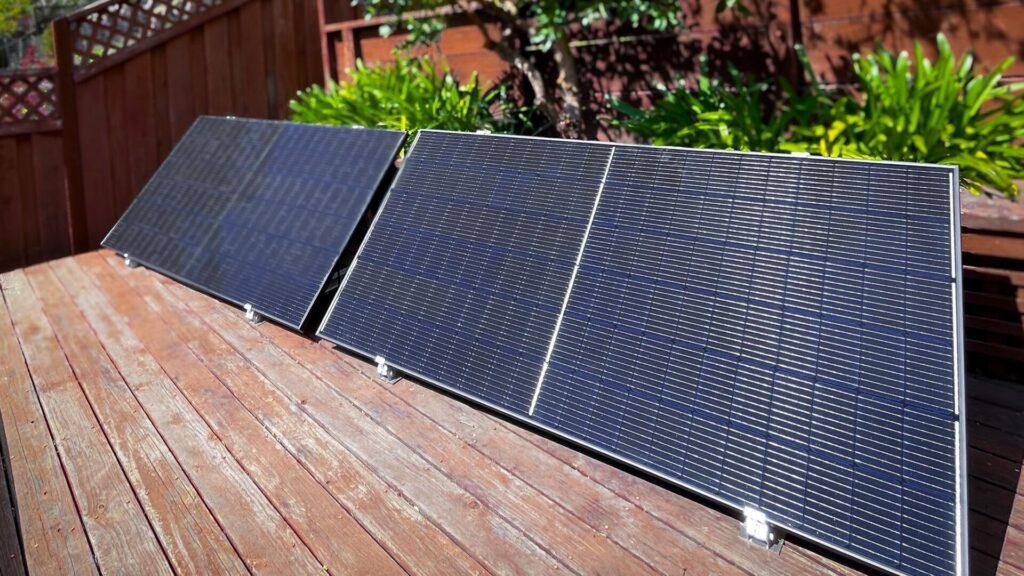
A legislative push in Springfield proposes a shift in how residents access renewable energy. State Senator Rachel Ventura and State Representative Daniel Didech recently introduced the Plug-In Illinois Act, aiming to legalize and deregulate plug-in solar energy systems across the state. Roughly 42 percent of households nationwide lack the ability to install traditional rooftop panels. This barrier excludes renters, condo owners, and those living in multi-family buildings from participating directly in clean energy initiatives. Senate Bill 3104 and its companion House Bill 4524 seek to bypass these obstacles, permitting residents to install small-scale solar panels on balconies, patios, or yards, connecting them directly into standard electrical outlets.
While Illinois is already making headlines for massive utility-scale projects like the $450 million CPV Paxton Solar investment in Ford County, the Plug-In Illinois Act shifts the focus back to empowering individual residents at home.
Rewriting the Rules of Grid Interconnection
Current state public utility law creates friction for small-scale solar adoption. Residents seeking to use plug-in solar energy systems must secure formal interconnection agreements and receive pre-approval from their electricity providers. Such bureaucratic hurdles often cost more in time and fees than the equipment itself.
Senate Bill 3104 eliminates these requirements for systems generating 391 watts or less. Users simply notify their utility company within 30 days of installation. The state recognizes that these tiny generation stations act differently than massive rooftop arrays. Systems capable of outputting up to 1,200 watts remain permitted under slightly stricter safety guidelines, yet they still avoid the most cumbersome red tape. By stripping away exorbitant installation fees and bureaucratic delays, the state offers a realistic pathway for low-income households to lower their utility bills.
To better understand the broader national push to remove these exact types of barriers, watch this insightful video from the U.S. Department of Energy below.
Protecting Renters and Condo Owners
Property restrictions historically block green energy adoption for multi-family units. Landlords and homeowners’ associations frequently write lease agreements or bylaws that ban exterior attachments. The proposed legislation directly addresses this issue.
Under the new rules, HOAs, common interest community associations, and landlords face strict limits. They cannot adopt or enforce any covenant, bylaw, or lease that unreasonably restricts the installation or use of a plug-in solar energy system. Renters gain the legal right to place portable panels on exclusive-use areas like balconies. The equipment remains completely portable. A tenant can unplug their panels, pack them up, and take them to their next apartment. This portability transforms renewable energy from a permanent real estate upgrade into an everyday consumer appliance.
Technical Guardrails and Consumer Safety
Letting residents plug solar panels into household outlets requires strict technical standards. To guarantee consumer protection, the bill mandates that all permitted systems carry certification from a nationally recognized testing laboratory. The recent introduction of the UL 3700 standard provides a clear safety benchmark for these devices.
A traditional solar setup uses a central string inverter that converts direct current from all panels into alternating current at once. Plug-in models utilize microinverters attached directly to the back of each individual panel. This decentralized conversion process maximizes efficiency. If one panel falls under the shade of a nearby tree or building, the other panels continue operating at full capacity. The converted alternating current flows through a standard household plug. From there, the electricity seeks the path of least resistance, immediately running the closest active appliances on the home’s internal circuit before drawing any supplemental electricity from the external grid.
Built-in microinverters feature automatic shutoffs during grid outages. This mechanism prevents dangerous electrical backfeed that might endanger utility workers repairing neighborhood lines. The legislation explicitly shields electricity providers from liability regarding any damage or injury caused by a customer’s plug-in system. Since these smaller setups bypass standard interconnection protocols, they do not qualify for net-metering credits or distributed-generation rebates. The electricity generated is strictly for immediate, localized consumption.
Economic Realities of Small-Scale Generation
Purchasing a plug-in solar unit requires an initial investment ranging from $500 to $1,500. Once connected, these systems offset baseline household energy consumption. Every home has a continuous draw of electricity from always-on electronics like refrigerators, Wi-Fi routers, and standby appliances. The electricity produced by balcony panels flows into the home’s wiring, supplying these devices directly.
Energy advocacy groups estimate that these localized grids save users $10 to $15 per month. Over a year, the savings can cover two months’ worth of an average utility bill. A typical 800-watt balcony kit covers 15 to 25 percent of a standard apartment’s monthly electricity needs. The payback period often spans three to six years, depending on local utility rates.
This straightforward financial equation contrasts sharply with the complex financing structures often tied to whole-home solar packages. Many homeowners lease their rooftop equipment, taking on long-term contracts that involve monthly taxes and maintenance fees. Plug-in systems operate on a simple one-time purchase model. The absence of leasing fees, specialized contractor labor costs, and ongoing service subscriptions protects the consumer’s return on investment. If a tenant’s utility rates spike unexpectedly during a summer heatwave, the small balcony array provides a fixed buffer against those soaring prices.
| Metric | Traditional Rooftop Solar | Plug-In “Balcony” Solar |
| Average Cost | $15,000 – $30,000 | $500 – $1,500 |
| Primary Demographic | Single-family homeowners | Renters, condo owners, apartment dwellers |
| Installation Method | Professional contractors required | Do-it-yourself (plugs into standard wall outlet) |
| Grid Integration | Permits, utility interconnection agreement | 30-day post-installation utility notification |
| Incentive Eligibility | Qualifies for net-metering and state rebates | Excluded from net-metering and state rebates |
| Portability | Permanent property fixture | Fully portable, moves with the tenant |
Following International Precedents
Bringing solar capability to apartment balconies mimics successful models currently operating overseas. European markets, particularly Germany, have embraced this technology for years. Hundreds of thousands of plug-in systems operate safely across the continent. International manufacturers already produce reliable, cost-effective kits tested extensively in real-world scenarios.
Stateside, the momentum continues building. Utah recently passed similar legislation with unanimous bipartisan support. Lawmakers in Pennsylvania, Minnesota, New York, and Maine are actively debating their own versions of the bill. Illinois officials intend for this legislative effort to complement broader Illinois residential energy initiatives, spreading the financial benefits of renewable generation beyond wealthy property owners.
Shifting the Grid Paradigm
The Plug-In Illinois Act cleared the Senate Energy and Public Utilities Committee in mid-March, signaling strong initial support. The legislation represents a fundamental rethinking of energy infrastructure. Instead of relying solely on massive centralized generation plants or expensive rooftop arrays, the state is recognizing the collective impact of thousands of tiny, localized generators.
As greenhouse gas emissions continue to strain environmental targets, localized generation tools offer immediate relief. Providing renters with the agency to generate their own electricity shifts cultural attitudes in the direction of sustainability. Illinois positions itself to lead the Midwest in equitable energy access by advancing legislation that respects consumer safety and the urgent need for accessible green technology. The days of solar energy being an exclusive luxury for single-family homeowners might soon end, replaced by a more democratic approach to energy independence.