Let’s talk about those spinning white giants on the horizon – and I’m not talking about Instagram props. We’re diving into the real numbers behind wind energy’s environmental impact.
The Department of Energy’s latest report reveals something staggering: every megawatt-hour delivers $162 in environmental and health benefits. That’s like getting triple value for your energy dollar.
Over in Europe, wind power saves 142 million tonnes of CO2 every year. That’s like taking every car in Los Angeles off the road for a year.
The comparison gets frankly embarrassing for fossil fuels. Wind produces just 10 grams of CO2 per kWh. Coal? A whopping 800 grams. It’s the difference between a Prius and a fleet of smoke-belching 18-wheelers.
This isn’t just favorable data – it’s a knockout punch for clean energy advocates.
Wildlife and Habitat Considerations
The talk about wind energy and wildlife has been filled with myths, not facts. Let’s look at what the data really shows about birds and their homes.
Studies say wind farms kill only 0.3 birds per gigawatt-hour. But fossil fuels? They take 5.2 bird lives for the same amount of energy. It’s like worrying about a small bruise while a big problem is coming.
| Energy Source | Bird Fatalities per GW/hour | Habitat Impact |
|---|---|---|
| Wind Energy | 0.3 | Creates biodiversity zones |
| Fossil Fuels | 5.2 | Destroys ecosystems |
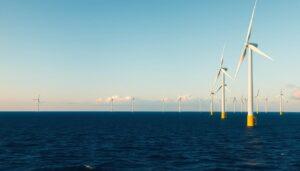
Wind farms are turning into biodiversity hotspots, not threats. Offshore, they become accidental marine sanctuaries. These areas between turbines help marine life thrive.
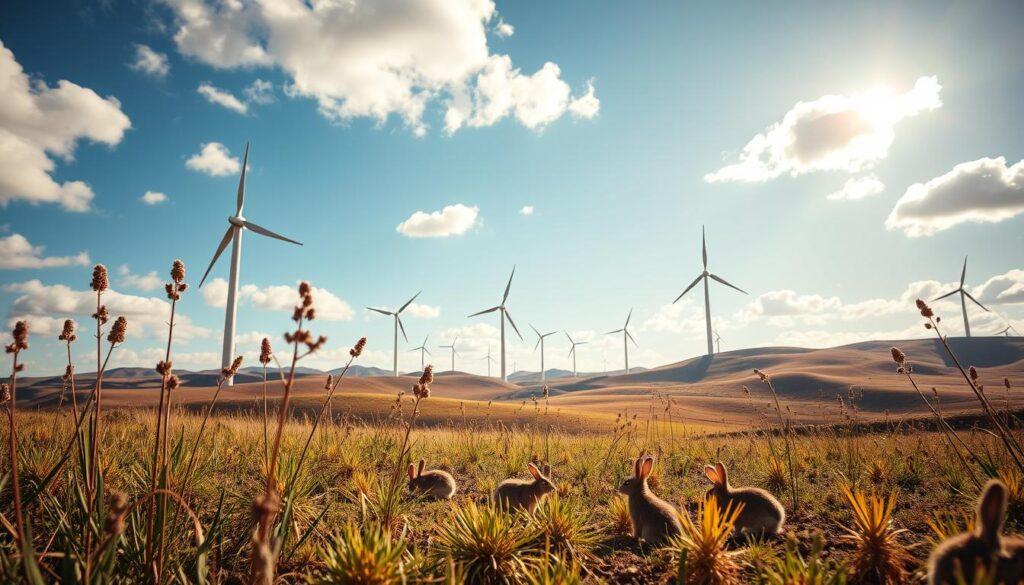
On land, wind farms become bee and butterfly havens. The land between turbines is perfect for these creatures and plants. It’s a protected area for decades, unlike other uses.
The industry is also taking steps to help wildlife:
- Ultrasound bird deterrents that act like avian air traffic control
- Smart siting that avoids major migration pathways
- Continuous monitoring and adjustment based on wildlife patterns
Compared to mining and drilling, wind energy is much better. While fossil fuels harm landscapes, wind energy creates zones that help local wildlife.
WindEurope’s programs show how serious they are about helping nature. They’re not just avoiding harm; they’re making habitats better than before. That’s turning a problem into a chance to help the environment.
Minimizing Noise and Visual Issues
Let’s tackle the big issues – noise complaints and landscape worries. Modern turbines are surprisingly quiet, even quieter than office talk or lawnmowers. The real challenge is in siting them right, where engineers turn noise management into an art.
Offshore, we use bubble curtain tech to protect marine life. It’s like underwater headphones for the ocean. This tech lets us generate clean energy without harming sea creatures.
Visual improvements are just as striking. We’re swapping old turbines for sleek, efficient ones. This change means fewer turbines but more power, making them look like modern art.
Today’s siting is a mix of engineering and beauty. We place turbines to be as unobtrusive as possible. They blend with the sky, becoming part of the scenery, not a blight.
A health study shows that smart placement solves most noise issues. We’re using advanced tech to play a game of 4D chess with the land.
The future of wind energy is about smart placement, not just bigger turbines. We’re working with communities to create solutions that respect both the land and people.
Regulatory Compliance
When energy executives hear “regulatory compliance,” they often worry. But wind energy is changing the game. It’s not just following rules; it’s setting new standards.
The EU’s 2025 ban on landfilling turbine blades is a big deal. It’s like a stricter rule than the plastic straw ban. The industry must recycle 85-90% of blades, which is impressive.
These blades are not just recycled. They’re turned into things like bridges and playgrounds. It’s a real example of the circular economy in action.
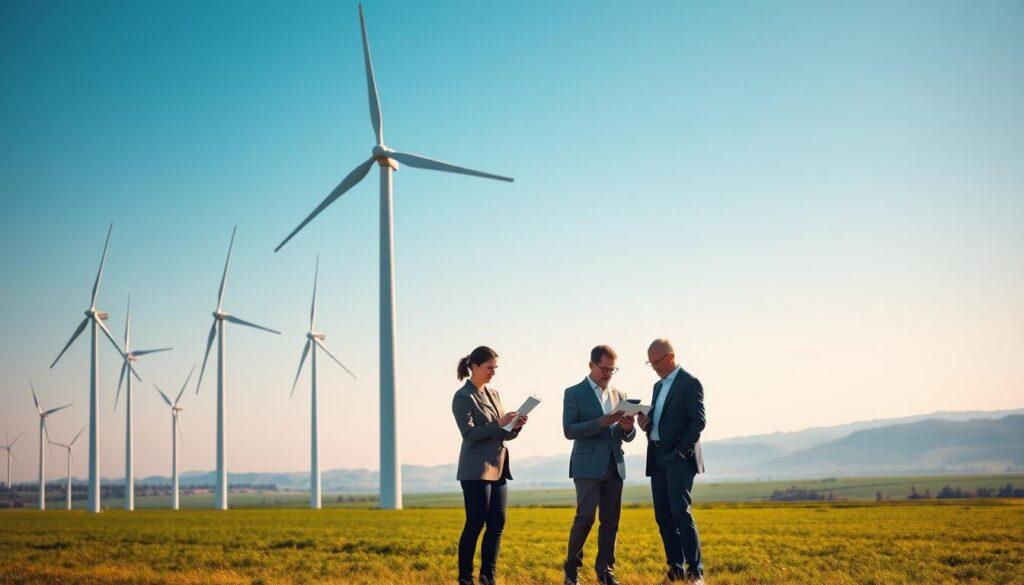
The environmental impact checks are very detailed. They involve independent reviews and lots of data. It’s like a NASA project.
But there’s more. Turbines are getting upgraded to last 35 years. It’s like they’re getting a mid-life makeover.
Wind energy’s rules are so strict that even fossil fuel companies are struggling to keep up. Wind energy is not just following rules; it’s creating them.
Win-Win Solutions for Nature
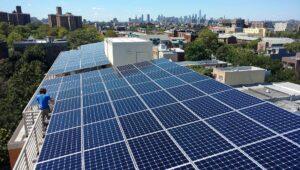
Hybrid wind-solar projects are like the ultimate power couple. They solve the problem of energy gaps smoothly. The total value is $183/MWh, including benefits for the grid.
Farmers are now grazing animals under turbines and getting lease payments. This supports rural communities economically. The carbon savings pay off in less than six months. Then, turbines produce clean energy for decades.
The real magic is in nature-based solutions paired with renewable energy. It’s not just about reducing harm to wildlife. It’s about creating benefits.
We’re building environmental ATMs that keep giving. The future isn’t about choosing between energy and ecology. It’s about seeing they can work together for better results and happier wildlife.