Ever wonder what happens when engineers get tired of conquering land and decide to take on the ocean? Meet offshore wind energy – the maritime answer to our renewable energy prayers.
These aren’t your average land-based turbines. We’re talking colossal structures rising from the water, harnessing stronger, more consistent winds that blow over open seas. It’s like discovering your quiet coastal town has been sitting on oil reserves – except instead of oil, it’s clean, endless power.
The basic premise is simple: place wind turbines in bodies of water instead of on land. But the execution? That’s where it gets fascinating. These installations turn the ocean into a massive renewable energy factory. Electricity is driven onshore through sophisticated transmission systems.
From fixed foundations in shallow waters to floating platforms in depths exceeding 60 meters, this technology represents humanity’s latest ambitious play in the renewable energy game. Because apparently, simply conquering land wasn’t ambitious enough.
Pros vs. Onshore Projects
Let’s settle the great renewable energy debate: offshore versus onshore wind. It’s like comparing a downtown penthouse to suburban living – both have their charms, but one clearly offers more spectacular views and fewer noisy neighbors.
Wind speeds over oceans don’t just whisper – they roar with 30-50% higher capacity than their land-based counterparts. Imagine your terrestrial turbine getting wind envy from its marine cousin. The ocean’s consistent, powerful winds create what energy nerds call “higher capacity factors” – translation: more bang for your buck.
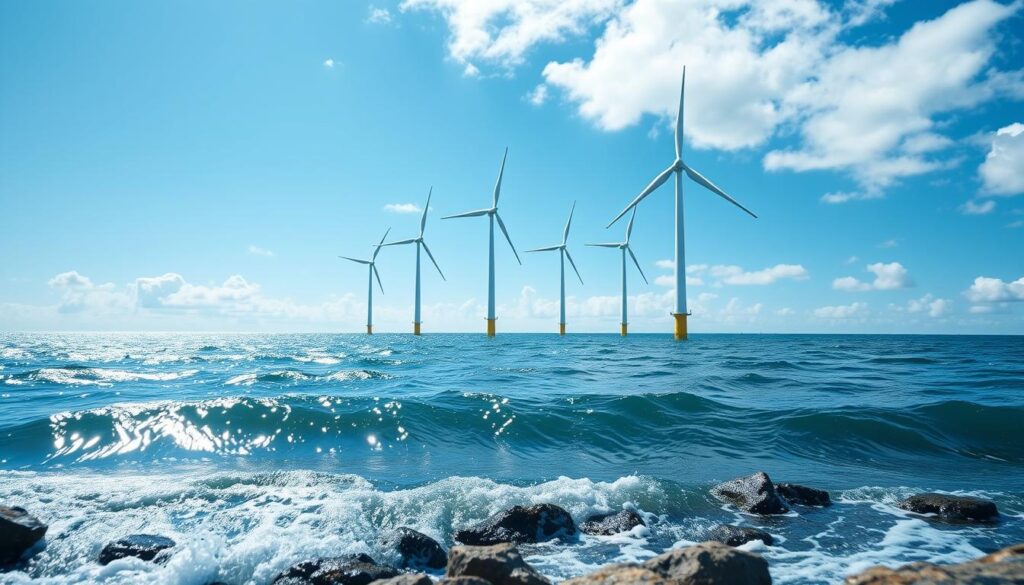
Location matters more in renewable energy than in real estate. Offshore installations solve the classic NIMBY (Not In My Backyard) problem that plagues onshore projects. Nobody complains about their ocean view being “ruined” by elegant turbines dancing on the horizon 15 miles out.
The onshore versus offshore debate isn’t just about aesthetics. Marine energy projects offer greater compatibility with other space uses. They’re the multitaskers of renewable energy – generating power while leaving fishing lanes, shipping routes, and recreational activities largely undisturbed.
Now for the numbers that’ll make your head spin. The World Bank estimates global technical offshore wind at a staggering 71 TW. That’s enough to power civilization several times over. About 70% of this sits in deep water, perfect for floating platforms that would make Jules Verne proud.
| Factor | Onshore Wind | Offshore Wind |
|---|---|---|
| Average Capacity Factor | 25-35% | 40-50% |
| Visual Impact | High | Low |
| Land Use Compatibility | Moderate | Excellent |
| Wind Consistency | Variable | Highly Stable |
| Community Opposition | Frequent | Rare |
The economics tell a fascinating story. Yes, offshore projects demand higher upfront investment – they’re the Ivy League education of renewable energy. But they scale faster than a Silicon Valley unicorn during a tech boom. The return on investment? Let’s just say Warren Buffett would approve.
Agricultural landscapes can host turbines, true. But oceans offer something land never can: endless space and relentless wind. It’s the difference between farming in Kansas and harnessing the entire Great Plains.
The future of marine energy isn’t just promising – it’s inevitable. As technology advances and costs drop, offshore wind is positioned to become the rock star of renewable energy. Fewer neighbor complaints, more power generation, and solutions that work with nature.
Key Projects Globally
Wind power is changing, and fast. In 2022, we added 8.8 gigawatts, reaching 64.3 GW globally. That’s enough to power Chicago, Houston, and Philadelphia together. And we’re just starting.
The Global Wind Energy Council says we’ll add 380 GW soon. That’s a huge energy shift, even for tech giants.
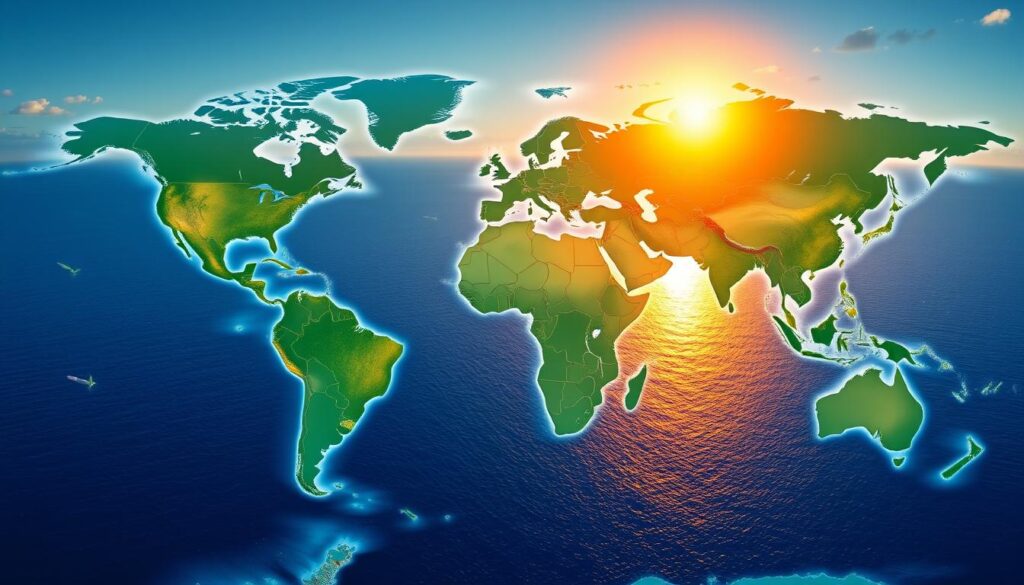
Europe is leading the renewable energy push. The UK’s Hornsea Project has 174 turbines, enough for over 1 million homes. Germany’s Energiewende is turning into a real oceanic change.
Asia is catching up fast. China is building offshore wind farms like crazy. India is looking at its coastlines, like Gujarat and Tamil Nadu, for big projects.
These projects are massive. We’re not just putting turbines in water; we’re building floating energy cities. Each blade is as big as a football field.
| Region | 2022 Capacity Added | Total Capacity | Notable Projects |
|---|---|---|---|
| Europe | 2.5 GW | 30.1 GW | Hornsea (UK), Kriegers Flak (DK) |
| Asia-Pacific | 6.1 GW | 32.1 GW | Zhangpu (China), Gujarat (India) |
| Americas | 0.2 GW | 0.4 GW | Vineyard Wind (US), AltaSea (US) |
This race to offshore dominance is more than energy. It’s about global power and environmental policy. The list of offshore wind farms shows nations investing in blue economy futures.
These projects are not just big; they’re symbolic. Each turbine says we’re serious about climate change. The 447 GW goal by 2030 is a warning to fossil fuels.
Environmental and Logistical Challenges
Building huge turbines in the ocean is no easy task. It’s like facing hurricane-force winds and saltwater corrosion head-on. The idea of offshore wind is both exciting and a bit scary for eco-warriors.
We’re making clean energy, but we’re also putting big structures in marine ecosystems. It’s like adding Manhattan skyscrapers to a bird migration path. We must think about how this affects wildlife.
Studies show wind projects harm wildlife less than other energy sources. Yet, we must find ways to reduce wind-wildlife conflicts. We need to consider bird migration, marine life, and fishing areas.
Maintaining these turbines in a North Sea winter is a huge challenge. It’s like fixing your roof during a hurricane. The marine environment is very tough.
Seawater corrosion and harsh weather are big problems. Specialized vessels are needed, and they’re expensive. The technical and engineering challenges are huge.
Floating wind technology is like smartphones in the 1990s. It’s promising but expensive and a bit clunky. The technology is not yet mature.
Several factors slow down floating offshore wind growth:
- Lower technological maturity than other renewable technologies
- Higher unit costs due to developmental stage
- Increased technological risk during deployment
This is the classic innovation dilemma. The technology needs to be cheaper to be used, but it needs to be used to get cheaper. It’s a chicken and egg problem.
The following table highlights key challenges facing offshore wind development:
| Challenge Category | Specific Issues | Impact Level | Current Solutions |
|---|---|---|---|
| Environmental | Bird migration patterns, marine ecosystem disruption | Medium-High | Advanced monitoring, strategic placement |
| Technical | Saltwater corrosion, extreme weather durability | High | Specialized materials, robust engineering |
| Maintenance | Accessibility issues, specialized vessel requirements | High | Service operation vessels, predictive maintenance |
| Economic | High initial costs, technological risk | Medium-High | Scale economies, innovation funding |
| Regulatory | Permitting complexity, environmental compliance | Medium | Streamlined processes, stakeholder engagement |
Reducing costs through scale and innovation is key. Each challenge is an opportunity for growth. The industry is working hard to find solutions that protect the environment and meet energy needs.
Despite the challenges, offshore wind technology is making rapid progress. The combination of engineering and environmental care is leading to exciting solutions. The ocean may be tough, but human creativity is even tougher.
Investment and Growth Potencial
Let’s dive into the financial side of this sector. Offshore wind is not just about saving the planet—it’s also about making money. In 2022, it added $20 billion to the U.S. economy. That’s a big deal, showing real change.
Job creation is a major win. Almost 150,000 jobs were created in all 50 states. Wind turbine technicians are now the stars of the renewable energy world. This growth creates jobs in manufacturing, installation, and maintenance, building a new energy world.
The growth is impressive, even compared to tech startups. With global capacity expected to rise, institutional investment is pouring in. This sector is a triple win: it’s profitable, sustainable, and creates jobs. Ports are becoming innovation centers, with endless possibilities.