Imagine a power source that doesn’t need huge investments or political deals. It’s already changing lives in places forgotten by old grids.
While leaders talk energy in cool rooms, turbines bring power to waiting communities. It’s a thrilling story where air in motion is the hero.
This isn’t just about making electricity. It’s about turning air into jobs and growth. Nature’s power is driving the 21st century in places the 20th century ignored.
The best part? Decentralized power solutions make communities self-sufficient. They use the air to create jobs and boost local economies. The U.S. Department of Energy says this approach brings power and growth to those who need it most.
It’s ironic and beautiful: using old wind patterns to solve today’s problems. It’s not just wise energy – it’s poetic justice.
Off-grid and Mini-grid Solutions
While big energy companies focus on centralized power, something new is happening. Communities that were once off the grid are now taking charge. It’s like switching from Blockbuster to Netflix, and the results are amazing.
Small-scale wind turbines are leading the charge in rural electrification. These aren’t the huge wind farms you see. Instead, they’re small, efficient systems that power villages on their own.
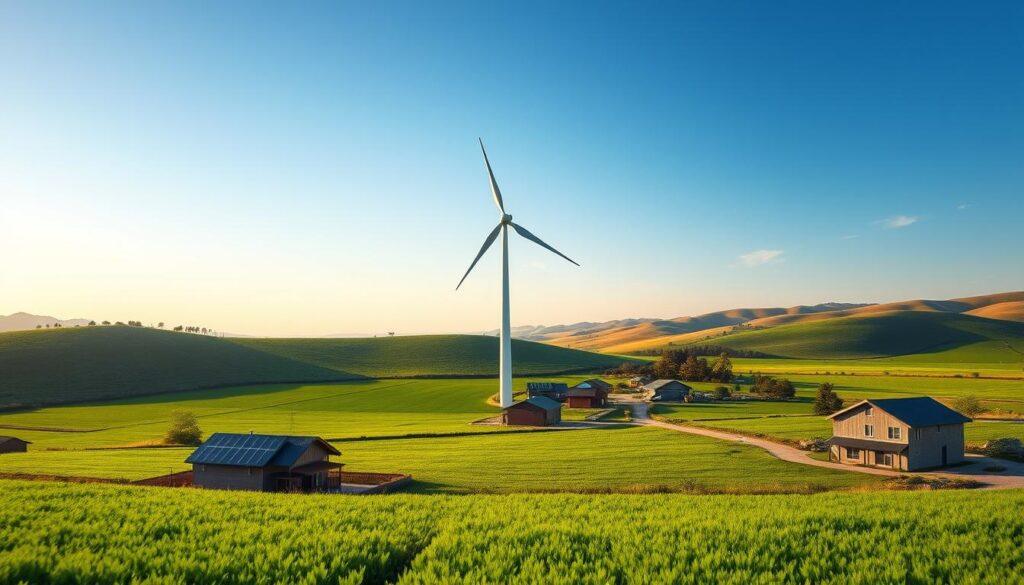
Off-grid wind systems are simple yet powerful. A single turbine can light up homes, heat them, cook meals, and even power small businesses. It’s like communities creating their own internet while the big companies are slow to catch up.
Microgrids are a big middle finger to fossil fuels. They let villages use local wind without big projects. Watching a turbine power a school or clinic shows how old-fashioned big power companies are.
Recent research on decentralized energy systems shows these solutions are more than practical. They’re changing communities’ lives fast. Now, communities that were once dependent on energy are now independent.
| Solution Type | Power Capacity | Community Size | Key Benefits |
|---|---|---|---|
| Micro Wind Turbines | 1-10 kW | 5-20 households | Low maintenance, easy installation |
| Hybrid Mini-grids | 10-100 kW | 20-100 households | Wind+solar combination, 24/7 power |
| Community Wind Farms | 100-500 kW | 100-500 households | Scalable, income generation |
Seeing these systems in action is truly magical. I’ve seen villages go from dark to light in one night. Children study late, clinics keep medicines cold, and businesses stay open late, all thanks to wind and creativity.
This isn’t just about electricity. It’s about giving communities power. When they control their energy, they change the game. The off-grid revolution is here, and it’s changing the energy world.
Success Stories from Developing Economies
Imagine a world where giant metal pinwheels and farmers getting rich are key to success. While diplomats talk about climate policy, real change is happening in fields. The Lake Benton Wind Energy Center in Minnesota is a prime example.
There, farmers earn more from turbines than crops. School districts use wind money for programs, not state grants. It shows that aid dependency is outdated.
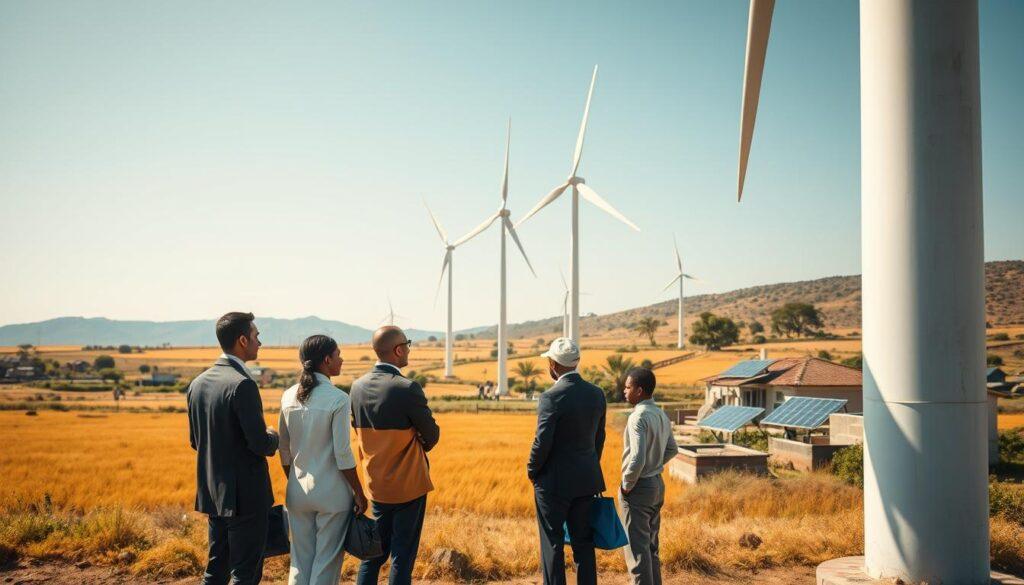
This isn’t just a Minnesota story. Across the globe, communities are thriving with wind power. The Peace River project shows how indigenous groups are changing their economic future. They’re not just hosting projects; they’re owning and benefiting from them.
The data shows wind power is better than traditional aid:
| Development Approach | Job Creation | Local Revenue | Community Control |
|---|---|---|---|
| Traditional Aid Programs | Temporary | External | Limited |
| Wind Energy Projects | Permanent skilled positions | Local retention | Substantial |
| Manufacturing Plants | Often relocated | Corporate profits | Minimal |
Turbine jobs are the new skilled trades in areas left by manufacturing. These jobs are not just minimum wage; they offer training without college degrees. Wind energy creates more than just power; it builds sustainable local economies.
Communities that benefit from energy projects become key players in their success. They’re not just receiving aid; they’re shaping their own futures. The money, jobs, and control stay local.
This marks a big change in global development. Wind energy builds self-sufficiency, not dependency. The proof is in school budgets funded by turbines and farmers sending kids to college.
Financing and Technical Hurdles
Let’s talk about the elephant in the turbine room: money and mechanics. Wind energy promises to free us from fossil fuels. But, getting it started is like trying to get a loan during a recession. You need top-notch credentials and a rich relative.
The costs for wind projects hit rural areas hard. We’re talking about spending hundreds of thousands of dollars on small turbines. Banks see these projects as risky, like subprime mortgages.
Banks are quick to finance fossil fuel projects but slow to back wind energy. They view wind as speculative art. The financial system for renewable energy is stuck in the past, while our tech has moved forward.
Wind energy has its own set of challenges. It’s like a moody artist who performs well some days and not others. This makes it hard to integrate into traditional grids.
Energy storage is key. Without affordable batteries, wind power can’t be a main source of energy. It’s like trying to bottle wind for later use, a concept that’s hard to grasp.
Grid integration is another puzzle. How do you mix variable wind power with steady energy demand? It requires smart grids, predictive models, and upgrades that are like smartphone updates.
The challenges of wind energy create a cycle. Without proven reliability, funding is hard to get. Without enough money, tech advancements are slow. We need innovation and creativity to break this cycle.
But, there are glimmers of hope. New financing models are popping up:
- Community-funded projects share the risk
- Green bonds attract eco-conscious investors
- Public-private partnerships get government support
- Pay-as-you-go models help cash-strapped areas
Technological advancements are also promising. Better batteries, AI for wind forecasting, and modular turbines are turning science fiction into reality. The gap between what’s possible and what’s affordable is getting smaller every year.
Solving these challenges means more than just tech. It’s about changing financial and technical systems for a new energy era. The wind is free, but tapping into its power needs both engineering genius and financial creativity.
Policy and Sustainability
Welcome to the policy jungle, where big business often hides behind economic talk. I’ve seen sustainability plans get watered down too many times. It’s like a G20 summit where everyone agrees climate change is bad but no one wants to pay.
According to UN data, 645 million people will lack electricity by 2030 at current rates. In 2023, international support for clean energy hit $21.6 billion, but it’s below the 2016 peak. We’re winning small battles but losing the big war.
Wind energy is a strong solution for rural electrification. Community-owned turbines can bypass big utility companies, giving energy independence where needed. The real magic is when local communities control their power.
True sustainability means three things: Aspire for universal access, Adapt to local conditions, and Amplify what works. Rural electrification is more than just power – it’s about changing the old energy rules. The question is, will we let politics keep villages in the dark?