Remember when carrying a brick phone felt cutting-edge? Today, energy has moved forward just as fast. Coal plants now seem as old as rotary dialers compared to today’s tech. The numbers show solar technology costs have fallen 50-80% from 2010, thanks to NREL data.
Fossil fuel prices, on the other hand, keep rising like Netflix subscriptions. They go up, but there’s no pause.
Why are smart businesses ditching old utilities? It’s all about the numbers. When energy bills drop, even the most number-crunching executives smile. That’s the change happening on rooftops and parking lots everywhere.
SEIA reports show solar jobs growing 12 times faster than the U.S. economy. It’s not just about being eco-friendly. It’s about saving money. Modern business energy solutions offer quick returns, faster than Elon’s SpaceX missions. The average commercial solar array pays off quicker than most car loans.
Here’s the real kicker: When was the last time your utility bill made you happy? Thought so. With tax incentives as sweet as Taylor Swift’s songs and lower maintenance costs, sticking with fossil fuels is a financial mistake.
Benefits for Businesses
Imagine your roof making money like Scrooge McDuck. Commercial solar isn’t just good for the planet. It’s a way to save big on your energy costs.
While homes get to feel good about saving energy, businesses can make real money. Nielsen’s study shows people pay more for green brands. This means more profit for you.

Sun-Powered Profit Margins
Let’s look at the numbers like Bruce Wayne. The DOE says solar can increase property value by 4.1%. That’s like getting free money.
Residential setups don’t get this benefit. But commercial properties do:
- Warehouse solar: 500%+ energy offset
- Retail spaces: 75% average bill reduction
- Manufacturing: 30-year locked energy rates
NREL data shows businesses save money faster than homes. This is because businesses have more space. Your roof can be an energy farm.
From Energy Drains to Revenue Gains
Now, let’s talk about turning costs into profits. That “overhead” line item can become a source of income. Thanks to commercial solar incentives.
Selling excess energy back to the grid is a big deal. It’s not just a little extra. It’s a way to make your business more profitable.
“Solar adoption correlates with 19% higher customer perception scores” – EnergySage Market Report 2023
Buildings in cities are becoming power plants. Your HVAC system could start paying you. It’s not just a dream. It’s the future of business.
Financial Incentives
When did paying taxes become a competitive sport? Uncle Sam’s playing a new game where business energy solutions aren’t just eco-friendly – they’re wallet-friendly. Let’s break down the financial playbook that turns solar adoption from a moral victory into a fiscal slam dunk.
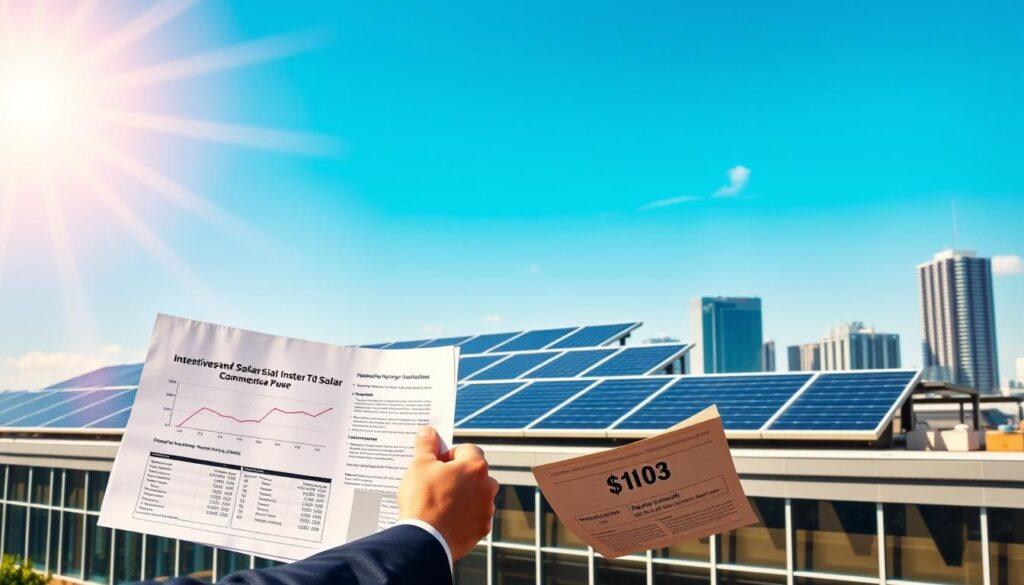
Tax Credits That Actually Credit
Imagine walking into a casino where the house pays you to play blackjack. That’s how the 30% federal Investment Tax Credit (ITC) works for commercial solar installations. The SEIA reports this 26% incentive (slated to drop to 22% in 2024) isn’t just an accounting trick – it’s real cash off your tax bill. It’s like the government saying, “Double or nothing,” and you get to keep all the cards.
“Solar incentives have flipped the traditional energy economy like a Black Friday mattress sale.”
ROI Timelines Explained
Remember when smartphone adoption moved slower than dial-up internet? Today’s solar ROI curves make the iPhone’s market penetration look glacial. Lawrence Berkeley National Laboratory data shows power purchase agreements (PPAs) now deliver business energy solutions payback in 3-5 years – faster than most car loans. It’s like upgrading from a flip phone to the latest Android, except the upgrade pays for itself.
Consider this breakdown of modern solar economics:
- Energy bills drop 40-70% immediately
- Depreciation benefits rival Hollywood accounting
- State rebates stack like pancakes at a diner breakfast
The real kicker? These commercial solar incentives aren’t some temporary promotion – they’re baked into federal law until at least 2035. It’s the closest thing to a sure bet in the market.
Case Studies
Let’s look at real numbers and a bit of pop culture. These examples show how businesses went from energy strugglers to green leaders.
Burgers, Bills, and Breaking Even
Big Bite Burgers was in a tough spot. Their energy bills were eating up 18% of their income. But then, they went solar:
“We didn’t just cut costs – we changed our story. Solar was our game-changer.”
Here’s what really happened:
| Metric | Pre-Solar | Post-Solar |
|---|---|---|
| Energy Costs | $28,500/mo | $9,100/mo |
| EPA Emissions | 78 tons CO2 | 12 tons CO2 |
| Break-even Point | N/A | 4.2 years |
The results speak for themselves. It’s like a Marvel movie in terms of ROI. They now power 82% of their operations with a 450kW system.
Manufacturing Sector Success Stories
SteelCraft Industries is another hero. They made their 300,000 sq ft facility a solar powerhouse. Their business energy solutions include:
- Generating 65% of their own power
- Reducing costs during peak hours
- Staying online even when the grid goes down
TextileTech also made a smart move. They rent out their roof for solar panels, making money from unused space. It’s like finding cash in an old jacket.
These stories are just the tip of the iceberg. The commercial solar movement is creating more success stories than Marvel’s latest movies. The real question is, can we afford to ignore this opportunity?
Conclusion
Sun Tzu never saw a photovoltaic panel, but his wisdom is timeless. He said, “The art of business is solar warfare.” Today, commercial solar projects are a game-changer for companies. They’re like a superpower.
The Solar Energy Industries Association predicts a 50% jump in solar energy solutions by 2027. Imagine your rivals’ solar panels as Death Stars, ready to destroy their energy costs. Would you want to be Luke Skywalker or the Empire footing the bill for energy destruction?
Think about the numbers. EPA data shows solar installations cut 145 tons of CO2 each year. That’s like removing 31 gas-guzzling cars from the planet. Remember Peter Gibbons from Office Space? Today, companies are fighting against high energy costs with solar power.
They’re saving up to 75% on bills in sunny states. Why keep funding fossil fuels when you can lead with renewables?
The real question is, do commercial solar projects make sense? SEIA says they power 23 million homes every year. That’s a lot of profit margins. It’s not just about saving the planet; it’s about saving money.
Are you ready to switch to solar? Contact a solar provider today. Don’t let your competitors build their second Death Star before you do.