Forget the “fuel of the future” hype. That phrase is so overused it’s practically a corporate mantra. Let’s talk logistics instead.
Renewable energy has a fatal flaw. The sun clocks out. The wind takes a nap. They’re brilliant but utterly unreliable employees. Hydrogen storage is the brilliant, almost alchemical, workaround.
Think of it as a Netflix binge for power. When your solar panels are producing a summer blockbuster surplus at noon, you use that electricity to split water. This process, called electrolysis, captures the energetic star: hydrogen.
You bottle it up. Later, when it’s dark and demand peaks, you release it through a fuel cell. It converts back into electricity. This is the ultimate energy time-shift.
It’s not a silver bullet. I see it as the indispensable logistical backbone for a renewable world. It turns sporadic generation into a reliable, on-demand supply. The global hydrogen storage market, valued at a cool $16.7 billion, is a bet on this fundamental logic.
Types of Hydrogen Systems
Choosing a hydrogen system is not just about picking the best one. It’s about matching the right technology to the task. Just like you wouldn’t use a sports car to haul freight, you need the right hydrogen system for your needs.
There are two main parts to consider: storage and conversion. Getting these right is key to a successful hydrogen project.
Let’s talk about storage first. You have three main options, each with its own strengths and weaknesses.
- Compressed Gas: This method uses high pressure to store hydrogen. It’s simple but takes up a lot of space. Think of it as energy in a canister.
- Cryogenic Liquid: This method cools hydrogen to very low temperatures. It’s more energy-dense but requires expensive, well-insulated tanks.
- Solid-State (e.g., Metal Hydrides): This method stores hydrogen in a solid form. It’s safer and operates at lower pressures. But, it can be heavy and slow to charge and discharge.
For more details on each method, check out our guide on 5 types of hydrogen storage.
But storage is only half the story. The real magic happens in fuel cells. These are like power plants that run as long as you feed them fuel and air. No combustion, just clean electrochemistry.
Not all fuel cells are the same. Their performance depends on the electrolyte they use. This determines their operating temperature, fuel purity needs, and best application.
| Fuel Cell Type | Electrolyte | Operating Temp. | Primary Application | Personality |
|---|---|---|---|---|
| Proton Exchange Membrane (PEMFC) | Polymer membrane | ~80°C (176°F) | Transport (cars, trucks, drones) | The agile athlete. Quick-starting, compact, but needs very pure hydrogen. |
| Solid Oxide (SOFC) | Ceramic oxide | 600-1000°C (1112-1832°F) | Stationary power (utilities, data centers) | The industrial philosopher. Hellishly hot but incredibly efficient and fuel-flexible. |
| Alkaline (AFC) | Potassium hydroxide solution | ~100°C (212°F) | Space (historically), specialty | The high-maintenance specialist. Pristine performance but intolerant to CO₂. It powered Apollo. |
| Phosphoric Acid (PAFC) | Liquid phosphoric acid | ~200°C (392°F) | Early stationary power (hotels, hospitals) | The reliable veteran. Commercialized early, tolerant to impurities, but lower efficiency. |
| Molten Carbonate (MCFC) | Molten carbonate salt | ~650°C (1202°F) | Large-scale stationary power | The utility-scale workhorse. High efficiency, can use biogas, but slow to start and degrade. |
See the pattern? The PEMFC is great for hydrogen cars. It’s fast and efficient. But, the SOFC or MCFC is better for big power needs. They’re slow to start but efficient for long-term use.
So, when you hear “hydrogen system,” think of a menu. You have to choose between a gas tank and a fuel cell or a liquid tank and a big fuel cell. It’s a complex choice.
Production & Storage Integration
Solar panels are like the stars of renewable energy. Green hydrogen systems are like their behind-the-scenes helpers. They keep the energy ready for when it’s needed most.
Here’s how it works. Sunlight hits solar panels, making electricity. The extra power goes to an electrolyzer. It splits water into hydrogen and oxygen, making green hydrogen.
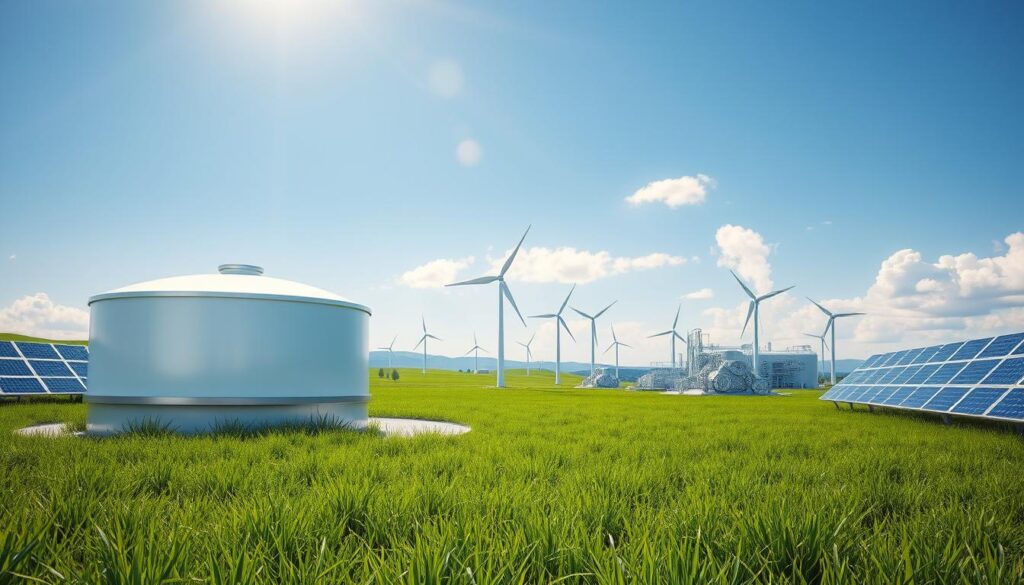
But, we can’t just make hydrogen. We need to store it. Tanks hold the hydrogen until it’s needed.
When it’s time, the hydrogen goes into a fuel cell. It makes electricity and water vapor. This way, the sun’s power lasts all day and night.
Why is this important? In places like Hawaii, diesel is expensive. Solar power alone can’t solve the problem. But with green hydrogen, the island can be energy-independent.
Critics say hydrogen isn’t perfect because of efficiency losses. But they miss the big picture. The real value is in what hydrogen can do that batteries can’t.
Batteries can’t store energy for long periods. But green hydrogen systems can. They’re great for long-term storage and keeping the grid stable.
| Storage Aspect | Lithium-ion Batteries | Pumped Hydro | Green Hydrogen Systems |
|---|---|---|---|
| Duration | Hours to days | Hours to days | Days to seasons |
| Energy Density | Medium | Low (geographic dependent) | Very High |
| Primary Use Case | Short-term grid balance, EVs | Large-scale daily cycling | Long-duration & seasonal storage |
| Infrastructure Footprint | Moderate | Massive (requires mountains/water) | Scalable and flexible |
| Transportability | Difficult at grid scale | Impossible | High (as gas or liquid) |
The table shows hydrogen’s special role. It’s not just about quick fixes. It’s about solving big energy problems.
This isn’t just about tech. It’s about saving money and the planet. For more on how it works, check out our guide on hydrogen production and storage.
So, when someone says hydrogen isn’t efficient, ask them a question. Would you prefer a system that’s 80% efficient for 8 hours or 40% efficient for 400 hours? Sometimes, staying power is more important than quick fixes.
Applications
So, we have a clean-burning, zero-emission fuel. Now, let’s see where hydrogen storage fits into the real world. It’s not just one solution; it’s a mix of answers for problems batteries can’t solve.
First, let’s talk about transportation. You might know the Toyota Mirai, a hydrogen sedan. But the real excitement is in heavy-duty trucks, buses, and trains. These big vehicles need a lot of power and can’t wait to charge. Hydrogen’s high energy and quick refueling make it the top choice for green transport.
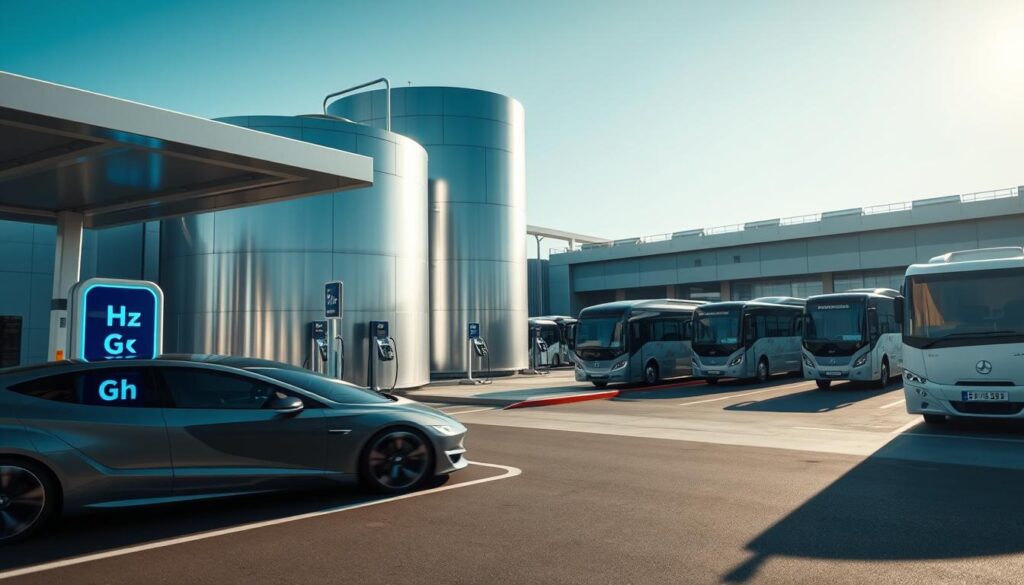
Next, let’s look at stationary uses. Imagine a data center running on hydrogen, not diesel. This isn’t just a dream; it’s a smart upgrade. Hydrogen can also power backup systems in hospitals, schools, and even whole areas, making it a silent, clean protector.
In the industrial world, hydrogen shines. It can replace natural gas or coal in high-temperature processes. This is how we can clean up industries like steel and chemicals without starting from scratch.
And then there are the special cases. Portable power packs for remote areas, disaster zones, or military use. In tough places, a small hydrogen storage unit can be a lifesaver.
The playing field isn’t even. In cars, hydrogen faces tough competition from battery EVs. But in big trucks, industrial heat, and long-term energy storage, it’s often the only game in town. The future is diverse, and hydrogen is the flexible tool we’ll need.
Barriers and Solutions
Let’s face the truth about hydrogen. Its promise is real, but it hits roadblocks. The first hurdle is cost. Green hydrogen is expensive because of electrolyzers and renewable power.
This is a big problem. But we’ve seen costs drop before. Solar panels are a good example.
Infrastructure is another challenge. We need fuel cell stations, but it’s a catch-22. To start, focus on industrial areas and trucking routes. Building a national network will come later.
Efficiency is also a concern. Converting electricity to hydrogen and back loses energy. But, sometimes storing hydrogen is worth it. Modern fuel cells are improving at this.
Safety worries from the past are holding us back. Today’s systems have many safety features. The real problem is what people think, not the science.
The journey to hydrogen is complex. The Inflation Reduction Act helps a bit. Companies like Air Liquide and Linde are investing heavily. Advances in materials will lower costs.
This isn’t an easy path to hydrogen utopia. It’s a tough, but important engineering challenge. The internet was hard to build too.